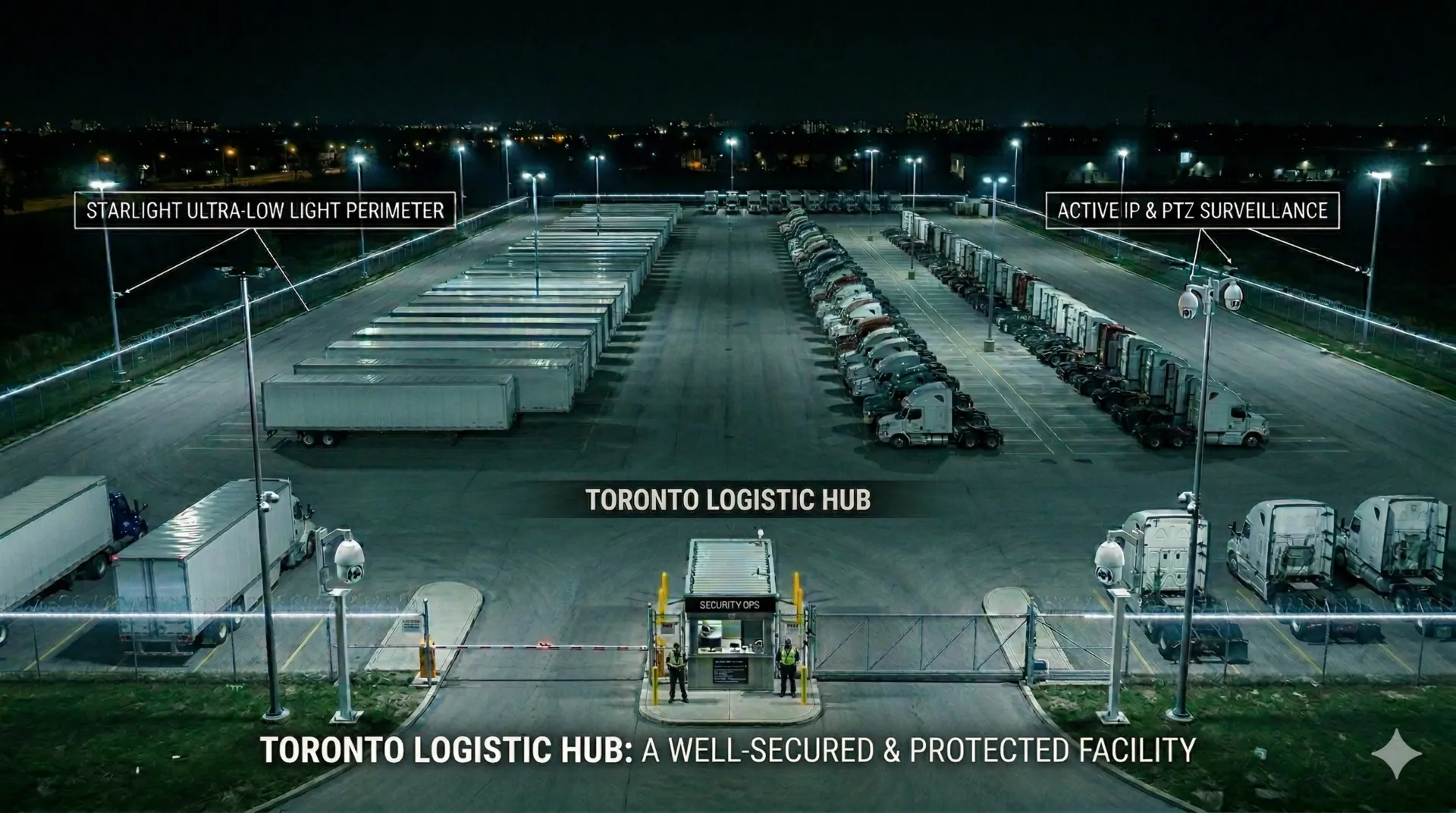
If you're paying for security guards, you already know the cost is significant. One guard at one site for overnight shifts runs $8,000-$15,000 per month depending on the provider and the hours. But most business owners accept that cost because they believe guards are the only real option for protecting their property.
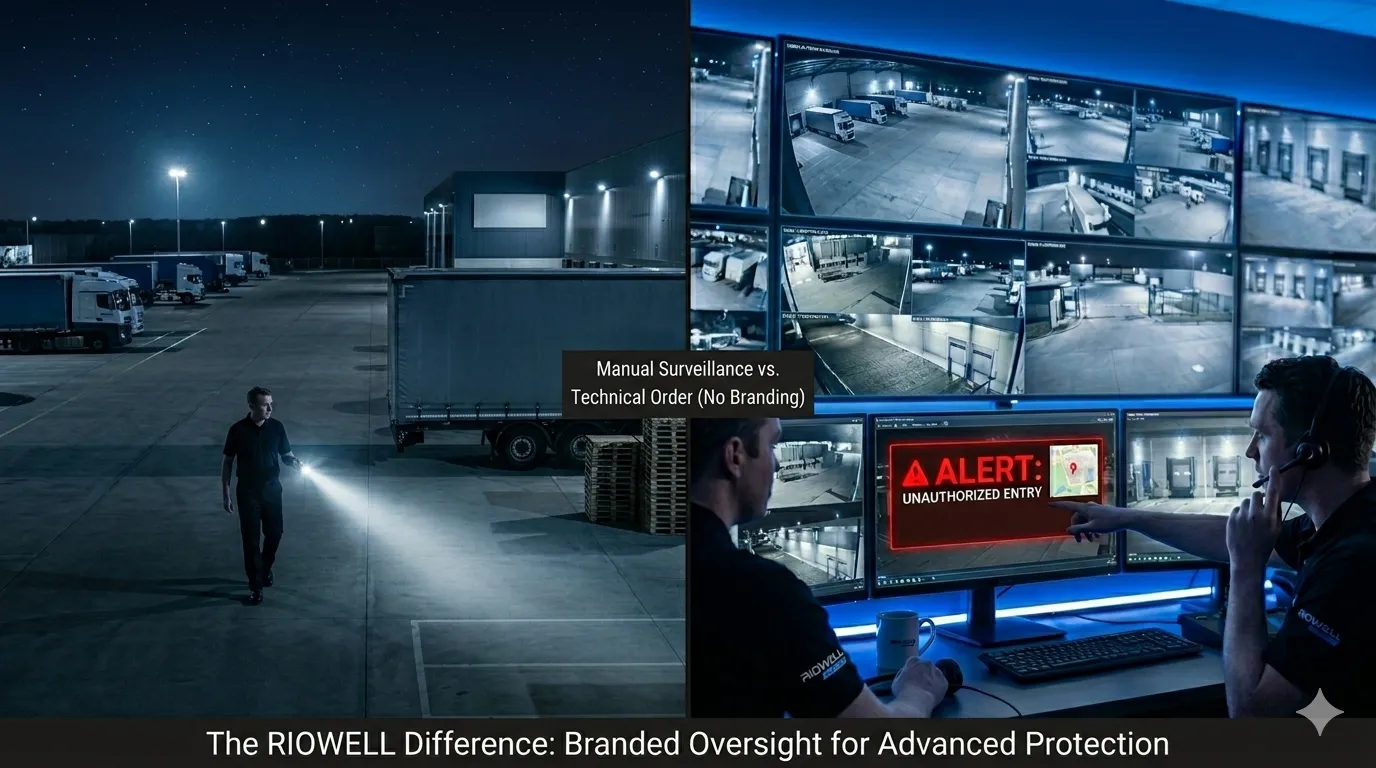
They're not. Live video monitoring has matured into a genuine alternative — and in many scenarios, a better one. But this isn't a simple "monitoring is always better" argument. Both options have real strengths and weaknesses, and the right choice depends on your specific situation. Here's the honest comparison.
The Head-to-Head Comparison
| Factor | Security Guards | Live Video Monitoring | |---|---|---| | Monthly Cost | $8,000 – $15,000 | ~$2,500 | | Coverage | One person, one spot at a time | Every camera simultaneously | | Response Time | Walk/drive to incident location | Under 30 seconds to police dispatch | | Night Performance | Fatigue, blind spots, limited visibility | Night vision cameras, no fatigue | | Evidence | Witness testimony | HD video + audio recordings | | Accountability | Self-reported activity logs | Timestamped recordings of every event | | Scalability | Linear cost — each guard adds $8K+/mo | Flat rate covers all cameras on site | | Weather | Reduced effectiveness in extreme conditions | Unaffected — cameras rated for −40°C to +60°C |
On paper, live monitoring wins most categories. But security isn't a spreadsheet exercise. Let's dig into the nuances.
When Security Guards Make Sense
There are situations where a physical human presence is genuinely the better choice. Being honest about this matters — the wrong security solution is worse than no solution because it creates a false sense of protection.
Gate access control requiring physical presence. If your site needs someone to physically check IDs, inspect vehicles, or manage a sign-in process at the gate, a camera can't do that. Logistics yards with strict chain-of-custody requirements, construction sites with controlled tool check-out, and facilities with safety compliance (hard hat verification, PPE checks) need a person at the gate. Remote intercom systems can handle simple visitor verification, but they can't inspect a trailer or check a manifest.
Customer-facing security. Retail stores, events, and hospitality venues often need security that interacts with people — directing foot traffic, de-escalating disputes, or simply being a visible reassuring presence for customers. A camera on the wall doesn't make a shopper feel safe. A uniformed guard at the entrance does.
High-risk environments requiring physical intervention. If your threat model includes scenarios where someone needs to physically intervene — restraining a trespasser, escorting someone off the property, or securing a scene until police arrive — cameras can't do that. Healthcare facilities with violent patient risks, nightclubs, and high-value retail locations often need the intervention capability that only a physical presence provides.
Sites where visible human presence is the primary deterrent. Some properties deter crime simply by having a guard visibly posted. Parking garages, condo lobbies, and school entrances rely on the psychological impact of a uniformed person. While camera signage provides some deterrence, it's not the same as a living, breathing person who can make eye contact.
When Live Monitoring Wins
For a large number of commercial properties, live monitoring is the objectively better solution. Here's where it dominates:
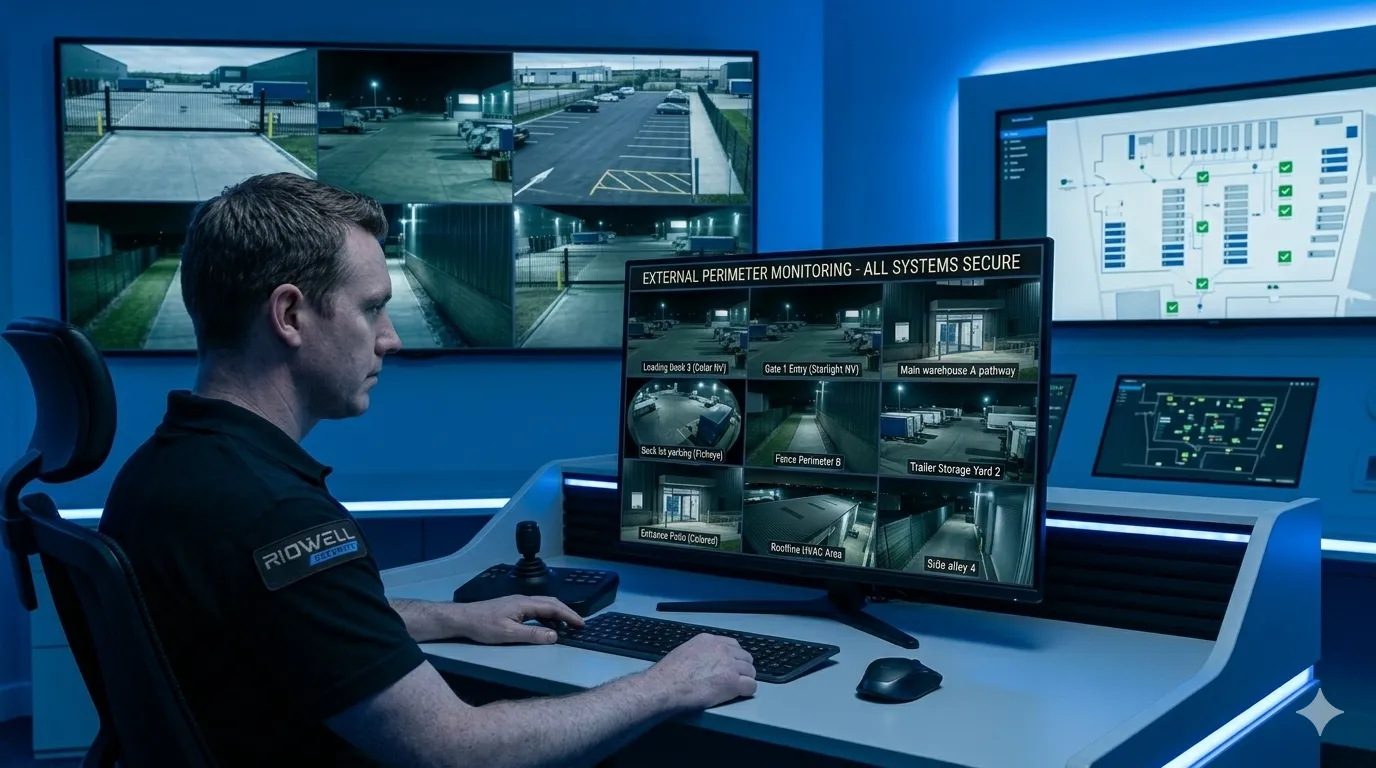
Overnight coverage. The 10 PM to 6 AM shift is where guards are weakest and monitoring is strongest. Guards get tired. They're human — attention drops after midnight, especially on quiet nights. They can only be in one place at a time, leaving the rest of the property unobserved. Cameras don't get tired. Night vision doesn't degrade at 3 AM. Analytics-based alerts catch motion whether an operator is actively watching that specific camera or not. If your primary security concern is overnight protection, monitoring is the clear winner.
Multi-site operations. If you have three locations, guards cost you $24,000-$45,000/month — three guards, three sites. Live monitoring from a central station can cover all three sites for a fraction of that. The monitoring operator switches between sites as alerts come in. Your cost doesn't triple just because your business has three locations.
Budget constraints. For many small and mid-sized businesses, $12,000/month for a guard simply isn't in the budget. The choice isn't "guard vs. monitoring" — it's "monitoring vs. nothing." At $2,500/month, live monitoring makes professional-grade security accessible to businesses that could never afford a guard service.
Evidence collection. When an incident happens, you need evidence for police, insurance, and potentially court. A guard provides witness testimony — valuable, but subjective and challengeable in court. Cameras provide timestamped HD video and audio that objectively documents exactly what happened, when, and who was involved. For insurance claims and criminal prosecution, video evidence is categorically stronger.
Accountability. How do you know your guard is actually doing rounds? You rely on their log. With monitoring, every alert, every operator action, and every escalation is logged automatically with timestamps. You can audit your security provider's performance at any time with objective data. Guard accountability depends on trust; monitoring accountability is built into the system.
The Math: $114,000 Per Year
Let's be specific. A single security guard for overnight coverage (10 PM - 6 AM, 7 days a week) at a typical GTA commercial property costs approximately $12,000/month. That's the going rate for licensed, insured guard service.
Live video monitoring for the same property — covering every camera, every zone, every angle — runs approximately $2,500/month.
The difference: $9,500/month. That's $114,000 per year.
Over a 5-year period, you save $570,000. Even after accounting for the upfront cost of a commercial camera system ($25,000-$45,000 installed), the net savings are enormous. That's not a rounding error — it's a business-changing amount of money that can be reinvested into operations, equipment, or growth.
The Hybrid Approach: Best of Both
The smartest security strategy for many properties isn't either/or — it's both, deployed strategically. Here's how the hybrid model works:
Guards during business hours. A guard handles gate access control, visitor management, and customer-facing security during the day when human interaction is most valuable. This is typically 8-12 hours of coverage when the property is active and occupied.
Live monitoring after hours. When the property closes and the guard goes home, the monitoring station takes over. Cameras cover every zone, operators respond to alerts, and police are dispatched within 30 seconds of a verified threat. This covers the 12-16 hours when the property is most vulnerable and a guard's effectiveness is lowest.
The hybrid approach gives you the best of both worlds: human presence when it matters most, and technology-driven coverage when humans are least effective. The cost is significantly less than 24-hour guard service, and the overnight coverage is actually better because cameras don't have shift-change gaps, fatigue, or blind spots.
Find Out What's Right for Your Site
Every property is different. A truck yard has different security needs than a retail plaza, and a warehouse is different from a construction site. We'll assess your property, your threat profile, and your budget, then recommend the solution — guards, monitoring, or hybrid — that actually fits.
No sales pitch, no pressure. Just an honest assessment from people who install these systems every day and know what works. Call (905) 550-0490) or book a free assessment to find out which approach is right for your property.