Most security incidents at outdoor commercial properties happen at night. Truck yards, construction sites, equipment storage lots, and warehouses are prime targets between sunset and sunrise because they're dark, unoccupied, and full of valuable materials. The cameras that protect these properties during the day may produce completely useless footage after dark — unless the system was designed specifically for night performance. Here's what you need to know about the three main night vision technologies and which one fits your application.
Infrared (IR) Night Vision
Infrared is the most common and most affordable night vision technology. IR cameras have built-in LED emitters around the lens that flood the scene with infrared light — invisible to the human eye but clearly visible to the camera sensor. The result is a black-and-white image that can be surprisingly detailed at close to medium range.
How IR Works
The camera's IR LEDs emit light in the 850nm or 940nm wavelength range. The sensor captures the reflected IR light and renders a greyscale image. Higher-end cameras use "smart IR" that adjusts the intensity of the emitters based on the scene — reducing overexposure of close objects while still illuminating distant areas.
Strengths
- Works in total darkness: IR cameras generate their own light source, so they work even in pitch-black environments with zero ambient light — interior rooms, windowless warehouses, underground parking.
- Affordable: IR LEDs are inexpensive to manufacture, so even budget commercial cameras include decent IR capability.
- Good for controlled environments: Indoor spaces, hallways, stairwells, and any area where the camera-to-subject distance is predictable and relatively short.
Limitations
- Range: Most IR cameras are effective to about 30 metres. Beyond that, the IR illumination falls off and the image gets noisy. Extended-range IR models with more powerful emitters can push to 50–80 metres, but at a higher cost.
- Black-and-white only: All IR footage is greyscale. You lose colour information entirely, which means you can't distinguish a red truck from a blue truck or describe what colour clothing a suspect was wearing.
- IR reflection issues: IR light bounces off reflective surfaces — windows, wet pavement, metal walls. This can cause hot spots and washed-out areas in the image. Proper camera positioning and smart IR help, but it's an inherent limitation.
Starlight Night Vision
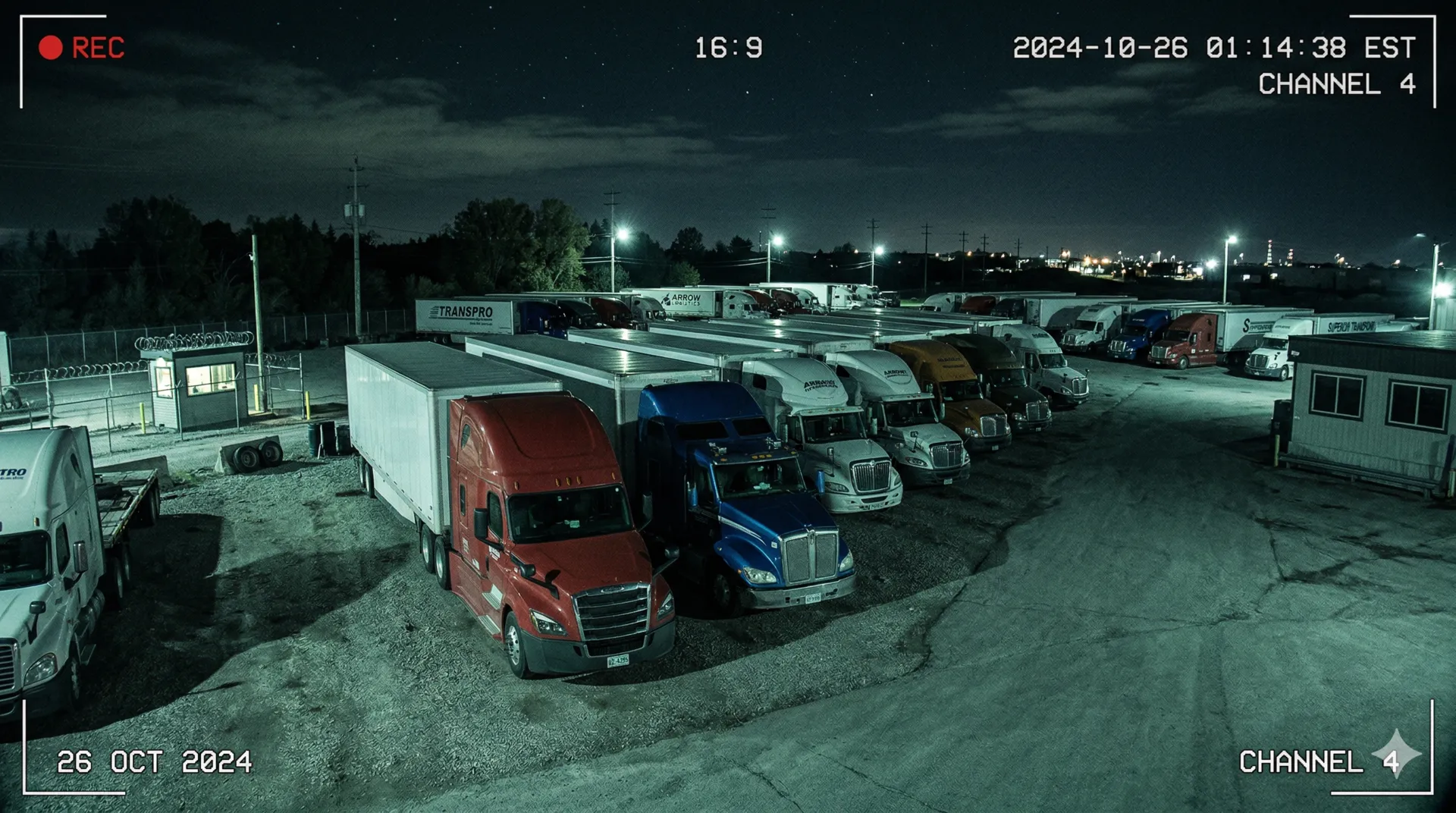
Starlight cameras use ultra-sensitive image sensors that amplify whatever ambient light is available — moonlight, streetlights, building lights, even starlight on a clear night. The result is full-colour footage at night, which is a significant advantage for identification and evidence.
How Starlight Works
Starlight sensors use larger pixels (sometimes called "big pixel" sensors) and back-illuminated sensor designs that capture more photons per pixel. Combined with wide-aperture lenses (f/1.0 to f/1.6) and advanced noise reduction processing, these cameras produce usable colour images in light levels as low as 0.001 lux — roughly equivalent to a moonless night with some ambient light on the horizon.
Strengths
- Full-colour footage at night: This is the headline feature. Colour footage gives you vehicle colours, clothing descriptions, skin tone, and other details that are impossible to capture in IR greyscale. For identification and prosecution, colour is enormously valuable.
- Longer effective range: Because starlight cameras use ambient light rather than their own emitters, they don't suffer from the same range limitations as IR. In an outdoor environment with even minimal lighting, starlight cameras can produce usable footage at 50 metres and beyond.
- No IR reflection issues: Without IR emitters, you avoid the hot spots, window reflections, and overexposure problems that plague IR cameras.
Limitations
- Needs some ambient light: Starlight cameras amplify existing light — they don't create it. In a truly pitch-dark environment with zero ambient light (inside a sealed warehouse, for example), starlight alone won't produce a usable image. Most outdoor environments have enough ambient light from the sky, distant streetlights, or building security lighting, but fully enclosed spaces may not.
- More expensive: The specialized sensors and lenses in starlight cameras command a price premium of 30–60% over equivalent IR-only models.
- Image noise in very low light: Even the best starlight sensors produce some noise in extremely dark scenes. Modern noise reduction algorithms handle this well, but the image won't be as clean as a well-lit daytime shot.
Thermal Imaging
Thermal cameras detect heat radiation emitted by objects and people, not reflected light. They produce images based on temperature differences, which makes them effective in conditions that defeat both IR and starlight cameras.
How Thermal Works
Every object with a temperature above absolute zero emits infrared radiation in the long-wave spectrum (7–14 micrometres). Thermal sensors detect this radiation and map it to a visual image where warmer objects appear brighter than cooler ones. A person walking across a cold yard at night shows up as a bright figure against a dark background — unmistakable and impossible to hide from.
Strengths
- Works in total darkness, fog, smoke, and dust: Thermal doesn't rely on any visible or near-infrared light. It works through conditions that blind every other camera type — dense fog, smoke, blowing dust, and complete darkness.
- Extremely long range: Thermal cameras can detect human-sized targets at 100 metres, 300 metres, or even further depending on the lens. For perimeter detection on large properties, nothing else comes close.
- Cannot be defeated by camouflage or hiding: A person can wear dark clothing, hide behind bushes, or avoid IR light — but they can't hide their body heat. Thermal sees through vegetation and detects people in conditions where optical cameras see nothing.
Limitations
- No detail — just shapes: Thermal images show heat signatures, not faces, licence plates, or clothing. A thermal camera can tell you that a person is on your property, but it cannot identify who that person is. You'll see a human-shaped heat blob, not a recognizable face.
- Expensive: Thermal cameras cost 3–5 times more than equivalent optical cameras. A commercial-grade thermal camera starts around $2,000–$3,000 per unit.
- Temperature equalization: In hot summer conditions when ambient temperatures approach body temperature, the contrast between a person and the background decreases. Thermal still works, but detection range and clarity reduce in extreme heat.
Recommendations by Application
Truck Yards and Equipment Yards
Large open yards with high-value vehicles and equipment need two things: long-range perimeter detection and close-range identification. The best approach combines thermal cameras on the perimeter fence for detection (they see someone approaching from 200+ metres away and trigger an alert) with starlight PTZ cameras that can pan, tilt, and zoom onto the intruder to capture colour detail — face, clothing, vehicle description. Thermal tells you someone is there; starlight tells you who they are.
Construction Sites
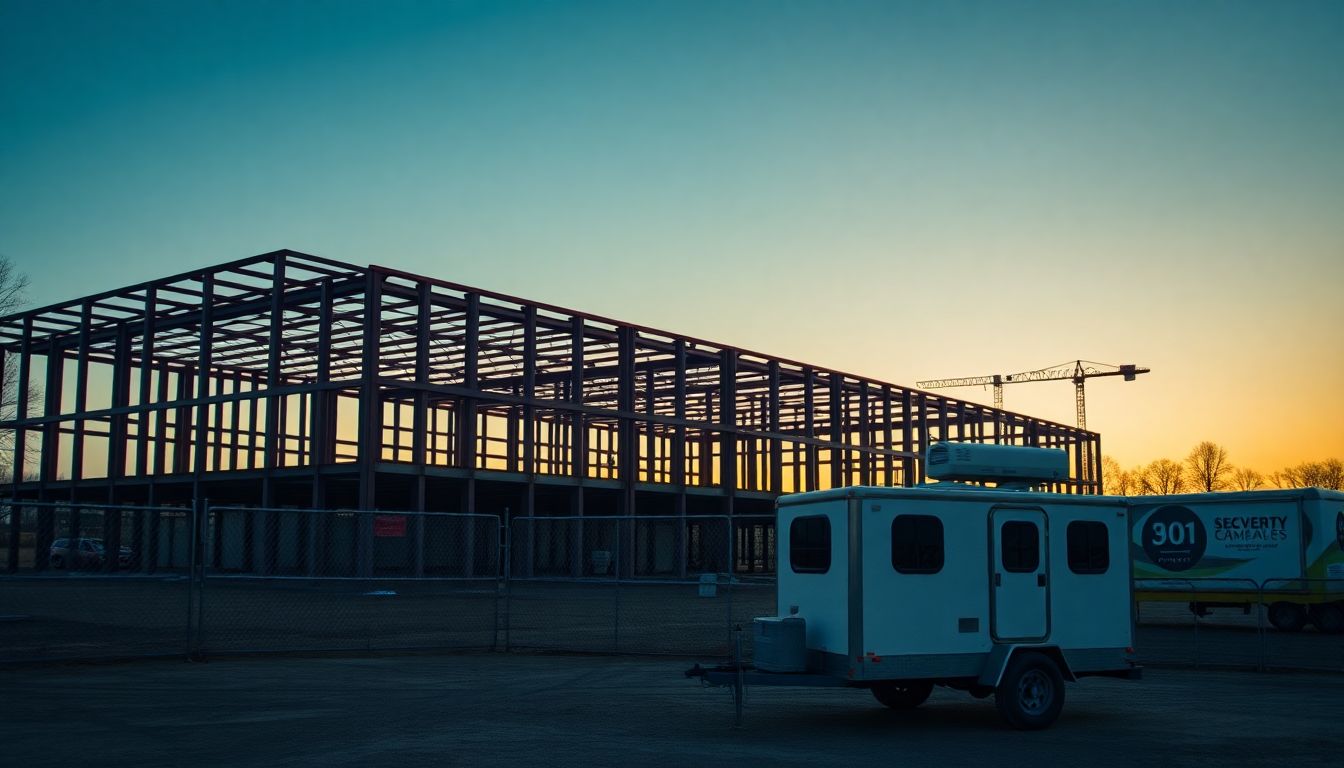
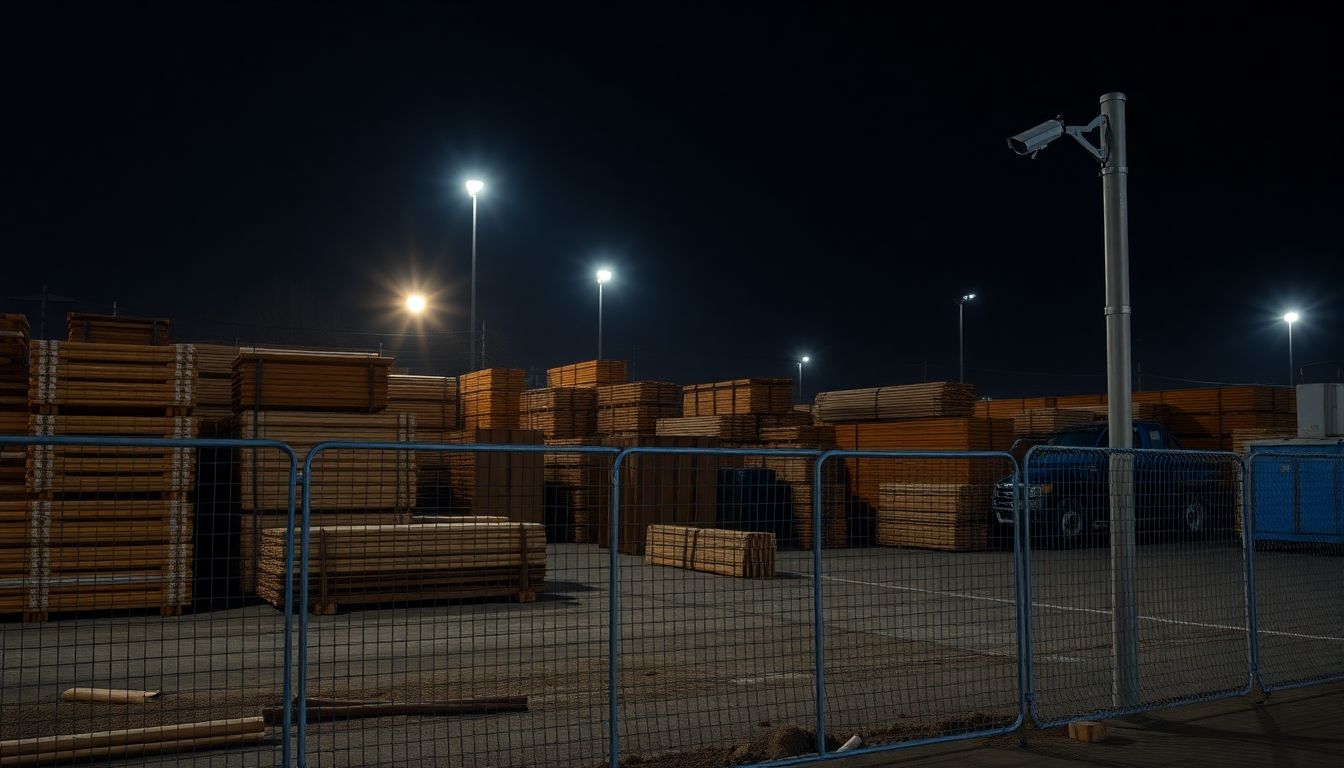
Construction sites usually have some ambient light from security lighting, street lights, or neighbouring properties. Starlight cameras with supplemental IR illuminators are the best fit — you get colour footage when ambient light is sufficient and the IR illuminator kicks in as a backup when light levels drop below the starlight threshold. Mount them high on poles to cover the full site, and use PTZ models for larger sites where operators need to track movement across the property.
Warehouses and Indoor Spaces
Indoor environments with controlled lighting are the easiest application. Standard IR cameras are perfectly adequate — the distances are short (typically under 20 metres), the lighting is predictable, and the cost savings compared to starlight are meaningful when you're installing 16 or 32 cameras across a facility. If the warehouse has areas that are completely dark during off-hours, IR is actually the better choice over starlight because it generates its own light rather than relying on ambient sources.
Combining Technologies
The most effective night-time security systems don't rely on a single technology. They layer multiple camera types based on the job each camera needs to do. Thermal for detection, starlight for identification, IR for controlled interior spaces — each technology covers the others' weaknesses. A well-designed system uses the right camera at the right location rather than applying one technology everywhere.
Get the Right Night Vision for Your Property
Night-time security isn't something you can solve with a product — it requires a design. We'll survey your property, assess the lighting conditions, identify the coverage zones, and recommend the right camera technology for each area. No guesswork, no one-size-fits-all approach. Call (905) 550-0490) or visit our security camera page to schedule a free site assessment.