Construction is the most theft-targeted industry in Canada by loss volume. The Insurance Bureau of Canada estimates construction theft costs the industry hundreds of millions annually, and Ontario — with its concentration of active infrastructure, high-rise, and commercial projects — absorbs a disproportionate share. Equipment theft, material theft, and vandalism compound each other: a project that loses a generator or skid steer doesn't just lose the equipment — it loses the production days while waiting for a replacement.
The threat compounds across project phases. Early civil work is targeted for copper, aluminum, and ferrous scrap. Framing and mechanical phases attract lumber and HVAC component theft. Finishing phases — when appliances, fixtures, and high-value millwork are on-site — attract organized smash-and-grab crews. Every phase has a different risk profile, and most construction site security setups don't adapt to it.
The Threat Landscape on Ontario Construction Sites
Equipment theft is the highest-loss category. Excavators, skid steers, generators, light towers, and compressors are frequent targets. Ontario has an active market for stolen construction equipment — both domestically and through export channels. Equipment without visible GPS tracking or immobilizers is moved within hours of theft. The most targeted window is Friday night through Sunday morning, when sites are unmanned and discovery is delayed.
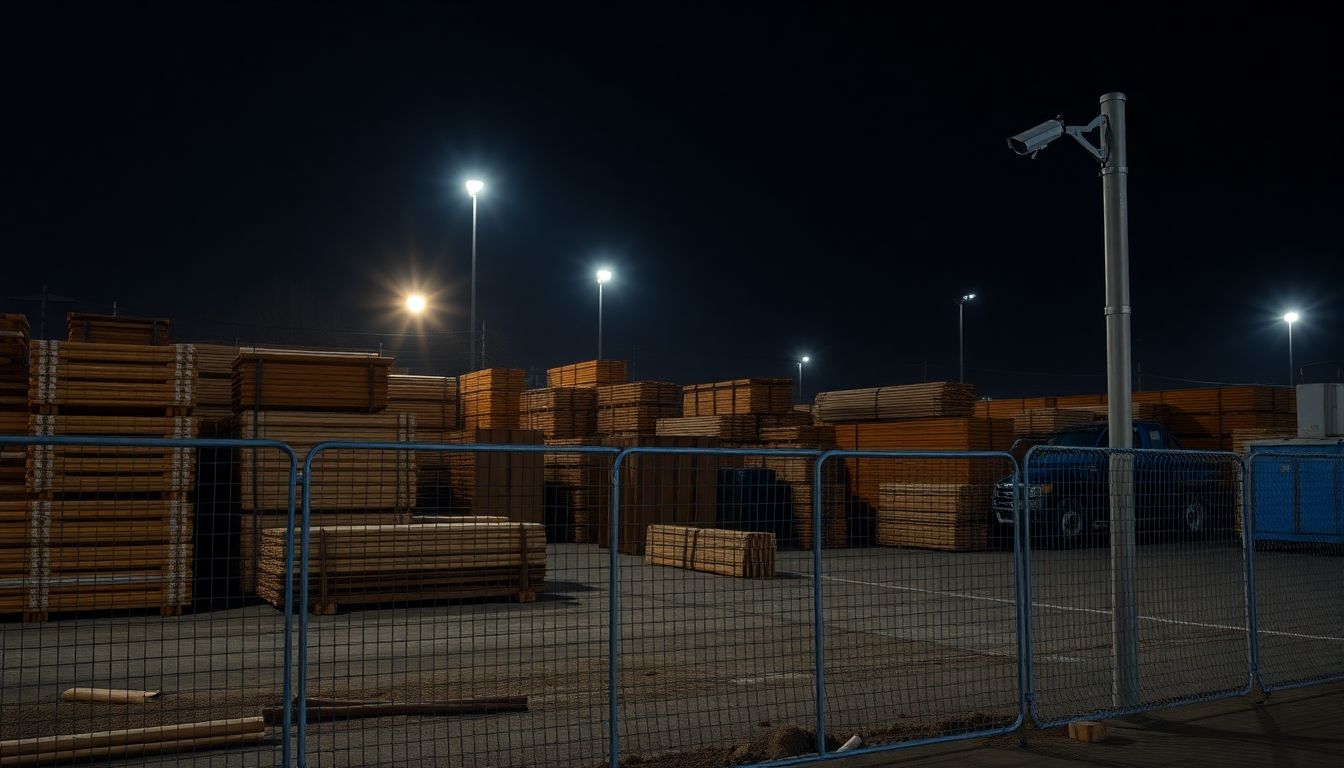
Material theft concentrates on copper wiring, aluminum forms, and lumber. Sites with rough-in electrical work completed but not yet covered are particularly vulnerable — copper represents a quick cash conversion through scrap channels. Lumber theft at framing-phase projects can run to tens of thousands of dollars per incident.
Vandalism and arson. Disputed projects, labour disputes, and competitor sabotage make construction sites targets for intentional damage. Vandalism at finishing phases — where painted surfaces, glass, and installed fixtures are targeted — generates losses that aren't covered under standard equipment theft claims.
Access abuse. Unauthorized parties accessing active construction sites create significant liability exposure beyond theft. Personal injury, unauthorized dumping of materials, and deliberate damage by trespassers all generate claims that are costly to defend.
What Ontario Project Managers Get Wrong
Perimeter fencing as the primary security layer. Hoarding and chain-link fencing is required by Ontario Building Code for most urban construction sites. It provides a liability boundary, not a security barrier. Organized theft crews regard site fencing as a minor inconvenience. Relying on the fence as the security perimeter is the most common and most costly mistake on Ontario sites.
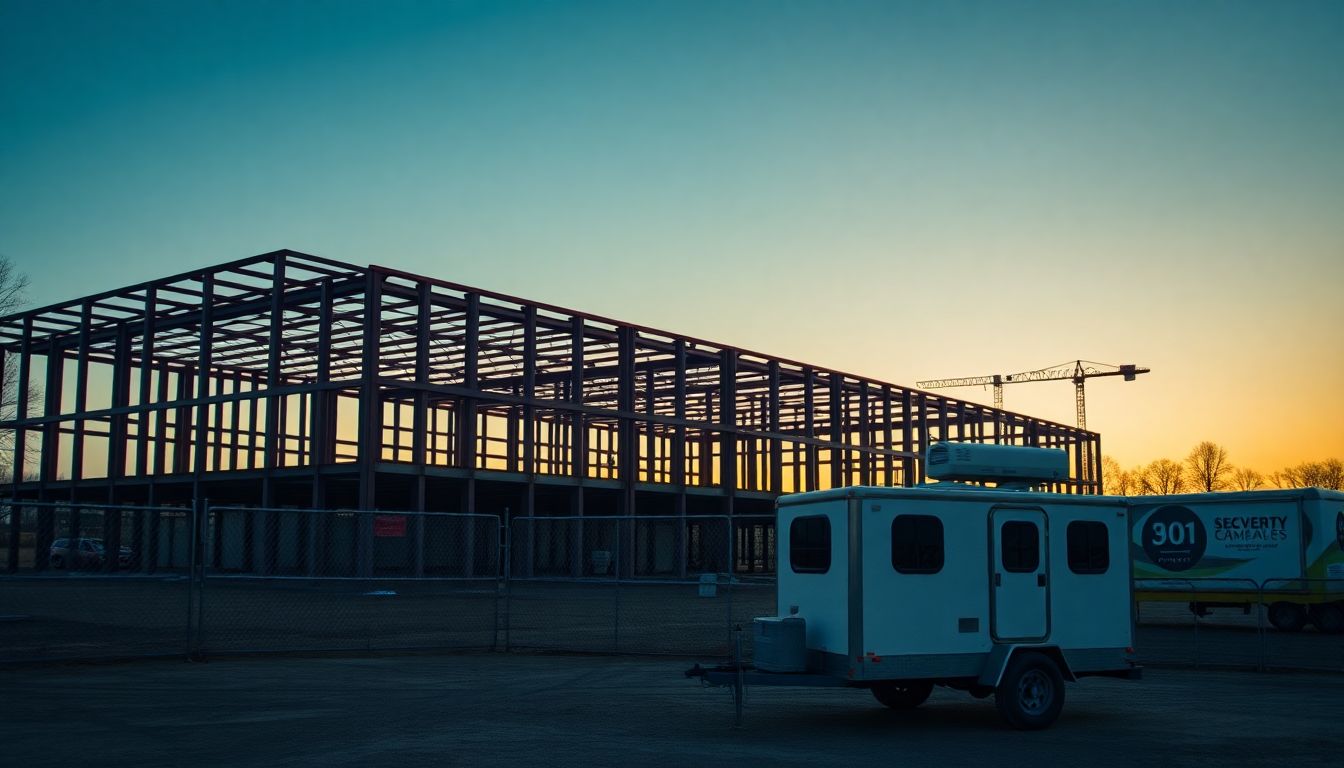
Static camera positions on mobile sites. A camera mounted on a temporary pole at the site entrance in month two of a project may not cover anything useful by month eight when the building has enclosed the structure and the active work has moved inside. Site security needs to evolve with the project phase. Most contracted camera deployments don't.
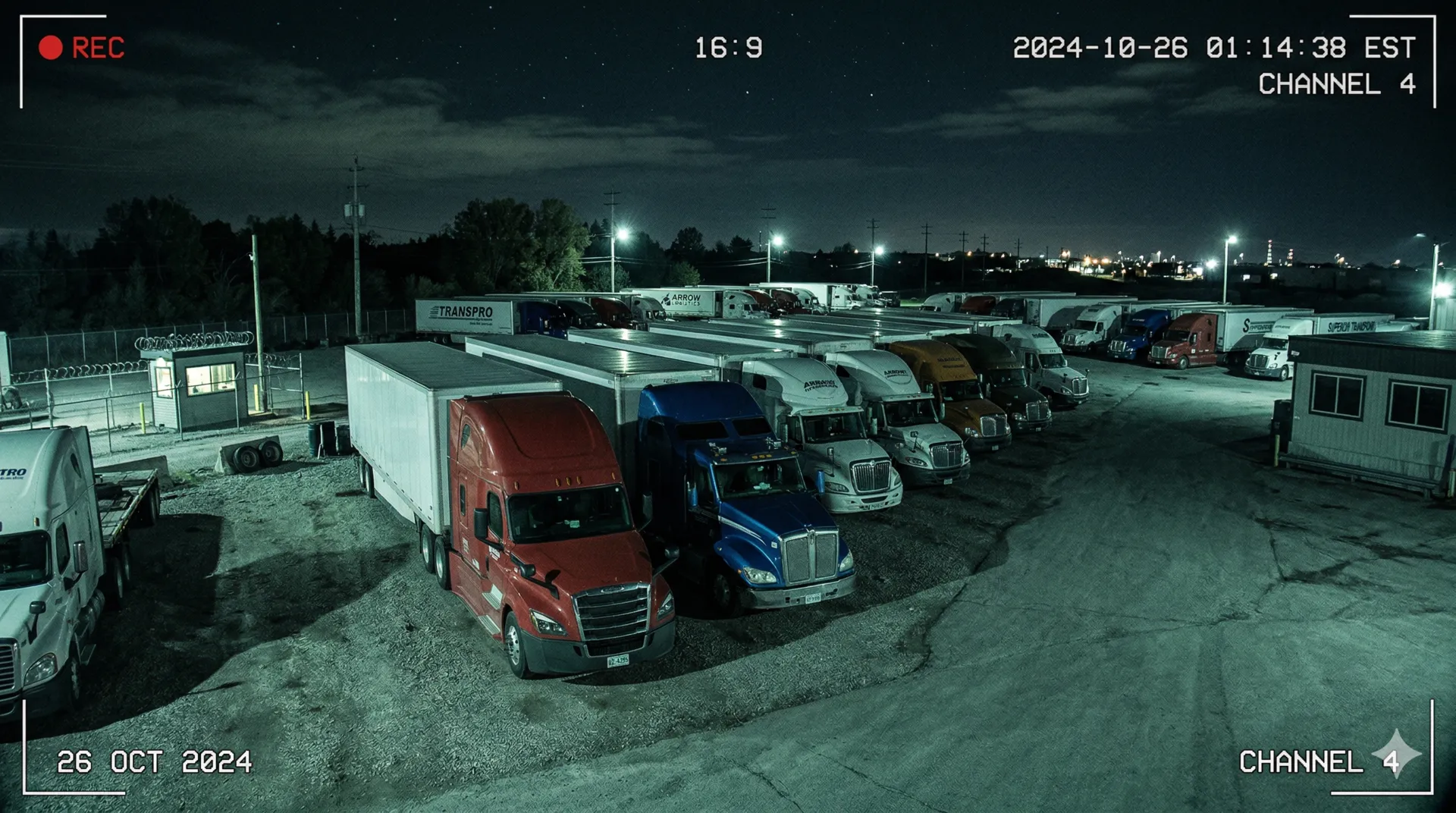
No after-hours live monitoring. Cameras recording to a local NVR answer the question "what happened?" They don't stop anything. A monitoring station that receives motion alerts during overnight hours and can deploy a voice challenge — or contact police — converts a recording system into an active deterrent. This is the difference between recovering footage after a theft and preventing it.
No GPS tracking on equipment. Most stolen construction equipment in Ontario is never recovered. Equipment with GPS tracking is recovered at meaningfully higher rates, and many insurers now offer premium reductions for fleets with verified GPS. The cost of GPS units is a fraction of the cost of a single theft incident.
Inadequate lighting. Construction sites at night are dark by nature. Camera systems that don't include IR illumination or site lighting in coverage zones produce footage that is useless for identification. Adequate lighting in high-risk areas — equipment staging, material storage, site entry — is both a deterrent and a camera performance requirement.
What Properly Secured Ontario Construction Sites Look Like
Effective construction site security starts with a phased plan aligned to the project schedule. The security layout at civil and foundation phases is different from framing phase and different again from finishing phase. Site security should be reviewed and updated at each major phase transition.
The perimeter layer. Beyond hoarding, powered gates with access control during business hours and camera coverage of all vehicle entry points. LPR capture at the main entrance documents every vehicle on-site. After-hours, the perimeter gates are closed and covered by camera with motion-alert capability.
The equipment and material storage layer. High-value equipment staging areas are covered by cameras with adequate resolution to identify individuals and read equipment serial numbers. GPS trackers are installed on all equipment above $10,000 replacement value. Fuel tanks and generators have separate coverage.
The monitoring layer. Live video monitoring during overnight hours provides an active response capability. When motion triggers during a monitored window, an operator assesses the situation and can initiate an audio challenge through on-site speakers — a proven deterrent that causes most opportunistic thieves to abort immediately.
The documentation layer. 30-day minimum retention on all cameras. Every access event logged. Equipment in/out logged by serial number. This creates a defensible record for insurance claims and law enforcement.
For a detailed breakdown of security systems designed for Ontario construction sites, see our construction site security page.