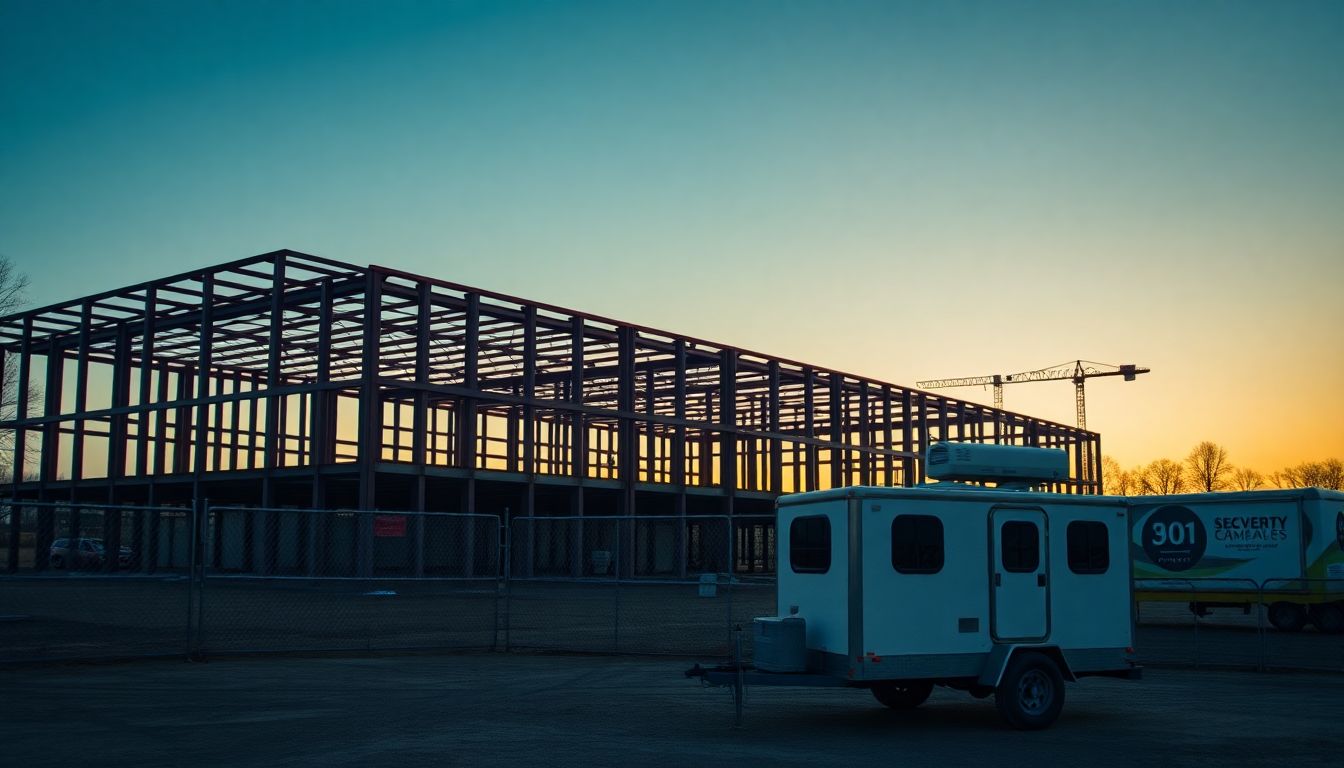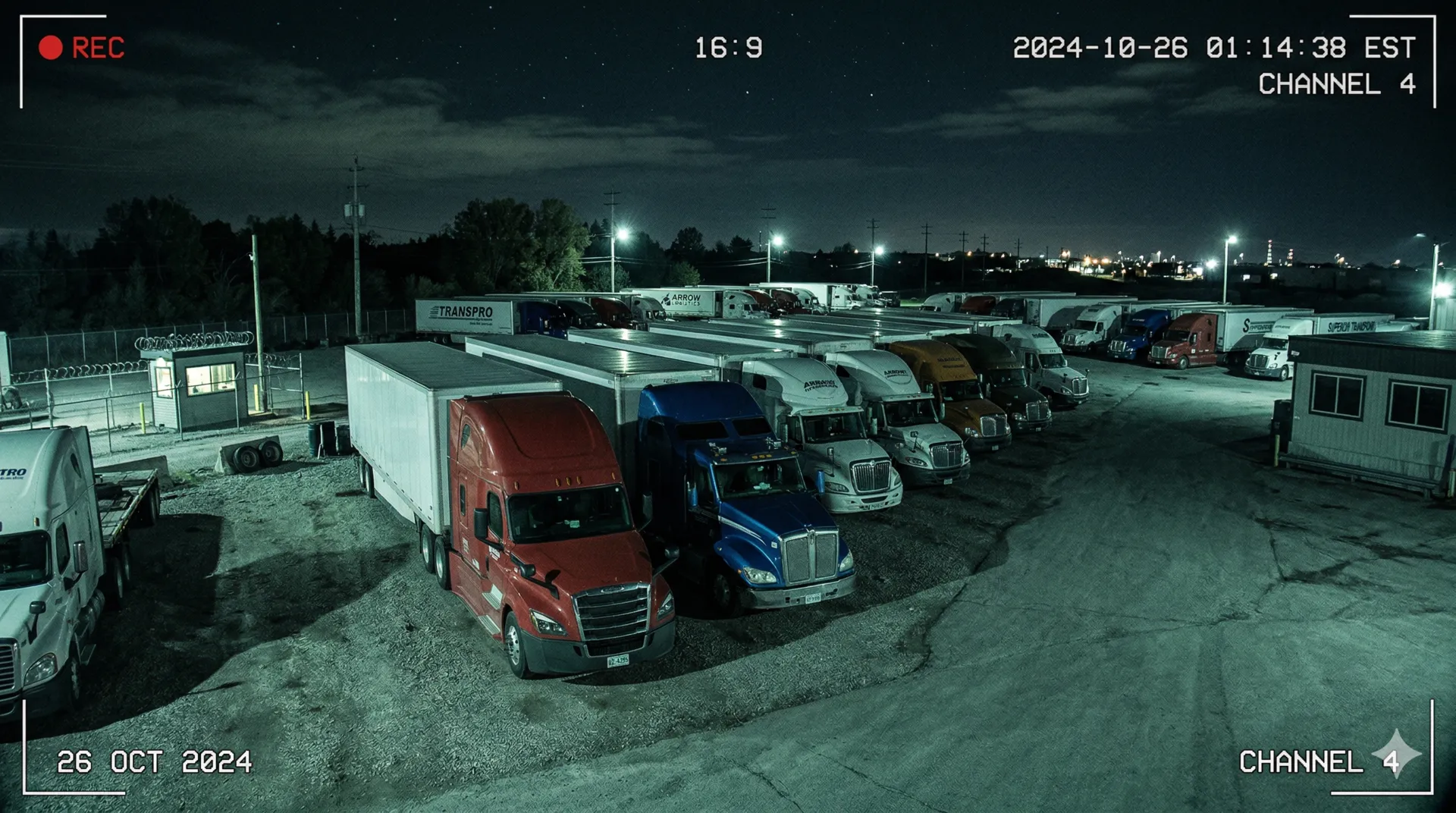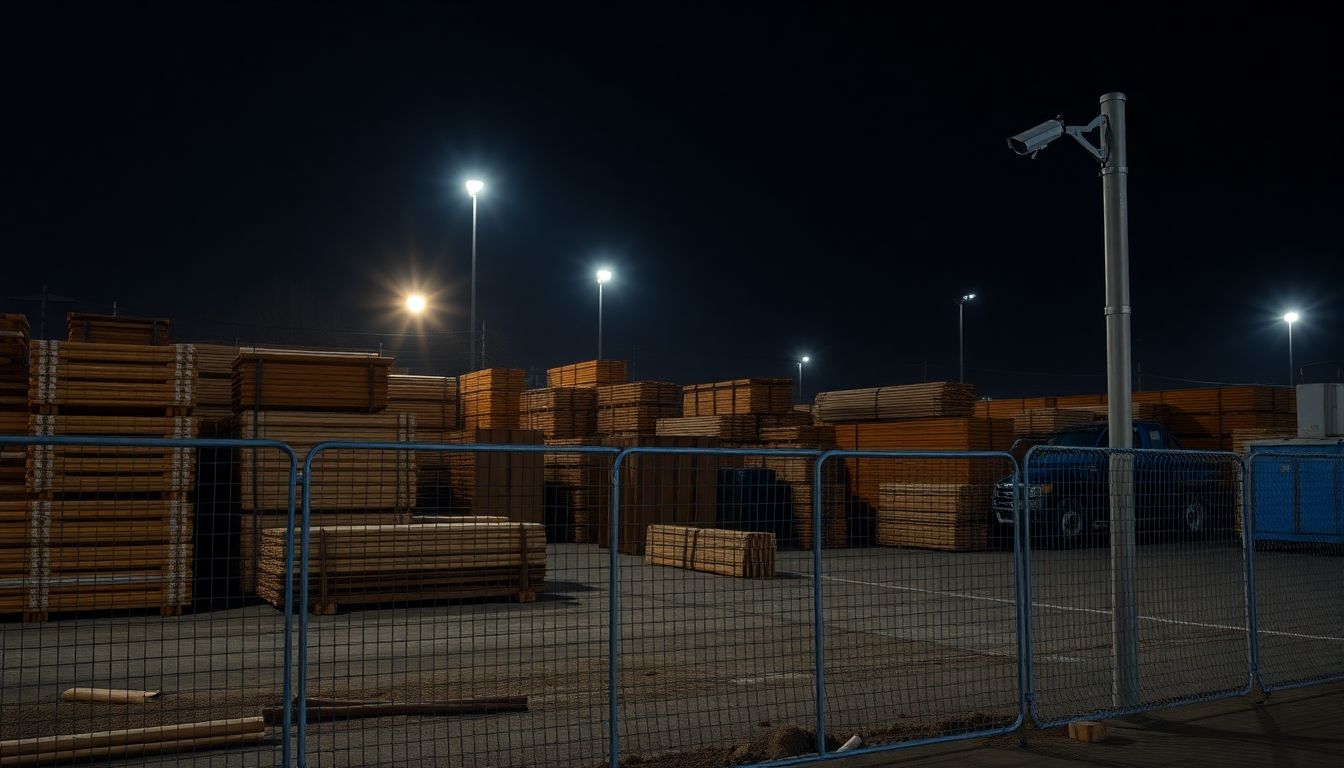
Construction sites are among the easiest targets in the country. Large inventories of high-value equipment and materials sit in open areas, behind chain-link fences, often with no human presence for 12+ hours a day. There's no inventory control at the gate. Access points are numerous. And the activity on a busy site — dozens of different trades, subcontractors, delivery vehicles — makes it difficult to identify who belongs and who doesn't.
The result is a theft problem that the construction industry has largely normalized. It shouldn't be.
The Scale of the Problem
The Insurance Bureau of Canada (IBC) and provincial police services consistently identify construction as the sector most exposed to property theft in Canada. Equipment theft alone — excavators, skid steers, generators, light towers — generates millions in losses annually across Ontario. The Ontario Provincial Police and municipal forces respond to hundreds of construction-related theft calls each year, and the reported figures substantially undercount the actual losses because many incidents go unreported when deductibles make claims uneconomical.
Organized theft rings operate across the province. These aren't opportunistic individuals looking for an unlocked tool bag — they're crews with flatbeds, equipment trailers, and connections to resale networks in Canada and the US. A tracked excavator gone overnight, copper wire stripped from a partially complete building, lumber cleared from a framing stage — these are planned operations, often using inside knowledge of site schedules.
What Gets Stolen
Heavy equipment is the highest-value target. Excavators, loaders, compactors, and telehandlers can be loaded and moved in under 20 minutes by experienced thieves with the right trailer. Machines left on remote sites over long weekends are particularly vulnerable.
Copper wire and other metals are stripped from sites during electrical rough-in stages. A partially wired commercial building can lose thousands of metres of copper wire in a single night. At current commodity prices, a single large-scale copper theft from an Ontario commercial project can exceed $50,000.
Power tools and hand tools represent high-volume, lower-value losses. A contractor trailer cleared overnight can mean $20,000–$40,000 in tools — most of it unrecovered because the items aren't serialized or tracked. These incidents are common enough that many trades have simply absorbed tool theft as a cost of business, which is the wrong response.
Building materials — lumber, steel, MEP supplies staged for the next week's work — are targeted at framing and rough-in stages when the value on site is highest. A pallet of engineered lumber or a staged HVAC delivery can disappear in a few trips.
Why Sites Are Easy Targets
The structural vulnerabilities are predictable:
- No continuous human presence. Most sites are unoccupied for 12+ hours daily, with no monitoring beyond whatever cameras happen to be installed (often none, or consumer-grade units with no night vision).
- Multiple access points. Temporary fencing with unlocked or easily defeated gates at multiple locations. No access log of who entered or departed.
- No lighting. Dark sites are theft-friendly sites. Organized crews prefer darkness and get it on most construction sites.
- No accountability at the gate. Dozens of subcontractors, delivery drivers, and inspectors move through the site daily. There's typically no log of vehicle plates or visitor identities.
- Valuable assets visible from the street. Equipment and materials staging visible from public roads provides free intelligence to anyone scoping the site.
A Layered Prevention Approach
No single measure is sufficient. The sites that prevent theft effectively use a combination of deterrence, detection, and response.
Lighting and signage. Motion-activated lighting covering equipment staging areas and gate approaches is the cheapest effective deterrent you can deploy. Well-lit sites are passed over more often than dark sites. Combine lighting with prominent signage indicating video surveillance and monitored response — this alone changes the risk calculation for opportunistic theft.
GPS tracking on heavy equipment. Cellular GPS trackers installed on all equipment over $25,000 provide recovery capability when prevention fails. Trackers should be concealed in multiple locations on each piece of equipment — a single visible tracker will be found and removed. Recovery rates for tracked equipment are dramatically higher than for untracked equipment. Many insurers offer premium reductions for equipment with active GPS monitoring.
Cellular camera systems for live monitoring. Fixed-infrastructure cameras require power and network connectivity — neither of which exists on most active construction sites. Solar-powered, cellular-connected camera systems can be deployed in hours, repositioned as the site changes, and connected to a remote monitoring center. When a monitoring operator detects intrusion after hours, they have three tools: audio warning through integrated speakers, police dispatch, and site manager notification. The deterrent effect of an audio challenge — "You're on camera, police have been called" — stops most intrusions before anything is touched.
Access control on trailers and secure storage. Tool trailers and equipment storage containers should use hardened lock hardware (not the standard padlocks that can be shimmed or cut in seconds), and ideally battery-powered smart locks that log access by time and user. A record of who opened the trailer and when is valuable both for investigation and for identifying inside-job scenarios.
Site access logging. At minimum, every vehicle entering the site should be noted. Camera systems with licence plate capture at the gate provide this automatically. Knowing which vehicles were on site in the 24 hours before a theft dramatically narrows investigation.
Inventory documentation. Serial numbers, photos, and GPS coordinates of all equipment. This is basic, but a significant portion of theft victims cannot provide adequate documentation to support insurance claims or police recovery efforts. Document at the start of every project and update as equipment rotates on and off site.
The cost of implementing these measures on a typical Ontario commercial construction project — cellular cameras, GPS trackers on equipment, upgraded gate hardware — is a fraction of the cost of a single equipment theft. The industry's tendency to absorb theft as a cost of doing business reflects a failure to accurately account for that cost over time.