Cabling is one of those decisions that seems boring until you get it wrong. Install the wrong spec and you'll either waste thousands on overkill — or rip it all out in three years because it can't keep up. Most businesses don't need a networking degree to make this decision. They just need plain-English guidance on what each type does and when it makes sense.
The Quick Comparison
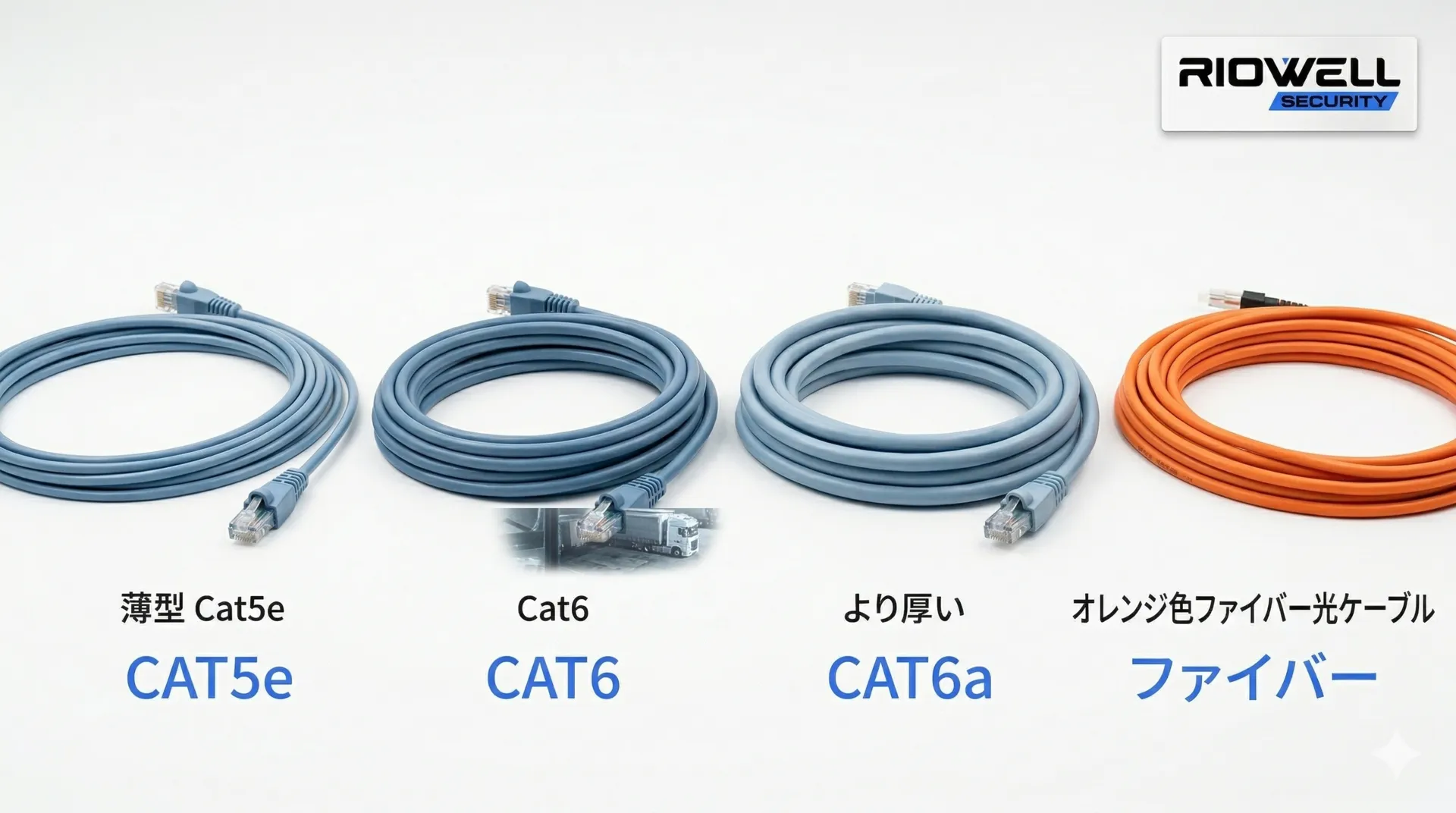
| Cable Type | Max Speed | Max Distance (at rated speed) | Approx. Cost/ft (installed) | |---|---|---|---| | Cat5e | 1 Gbps | 100 m (328 ft) | ~$0.15/ft | | Cat6 | 10 Gbps | 55 m (180 ft) at 10G; 100 m at 1G | ~$0.25/ft | | Cat6a | 10 Gbps | 100 m (328 ft) | ~$0.40/ft | | Fiber Optic | 100 Gbps+ | 300 m – 40+ km (depending on type) | $1–$3/ft |
Now let's break down when each makes sense for your business.
When Cat5e Is Fine
Cat5e supports 1 Gbps at the full 100-metre run distance. For many small businesses, that's plenty. If you're running a small office with basic internet, email, and cloud applications, Cat5e handles it. It's also perfectly adequate for most PoE security cameras — the vast majority of IP cameras need 100 Mbps or less, and Cat5e delivers PoE power without issue.
Where Cat5e still makes sense: small offices under 10 people, basic internet and email usage, security camera runs, and budget-constrained projects where the existing infrastructure is Cat5e and there's no plan to upgrade to 10GbE.
The catch: Cat5e is a legacy standard. If you're running new cable, the price difference to Cat6 is small enough that it rarely makes sense to install Cat5e in 2026.
When Cat6 Makes Sense
Cat6 is the standard for modern commercial installations, and for good reason. It supports 10 Gbps at up to 55 metres and 1 Gbps at the full 100-metre distance. For the vast majority of business runs (desk drops under 55 metres from the switch), Cat6 gives you 10G capability at a modest price premium over Cat5e.
Cat6 is the right call for: standard office networks, moderate data transfer needs, VoIP phone systems, wireless access point backhaul, and any new installation where you want 3–5 years of future-proofing without overspending.
For most businesses, Cat6 is the default recommendation — and we install it on roughly 90% of our commercial runs.
When Cat6a Is the Right Call
Cat6a solves Cat6's distance limitation. It delivers 10 Gbps at the full 100-metre run — not just 55 metres. It also has better shielding against crosstalk, which matters in environments with dense cable bundles.
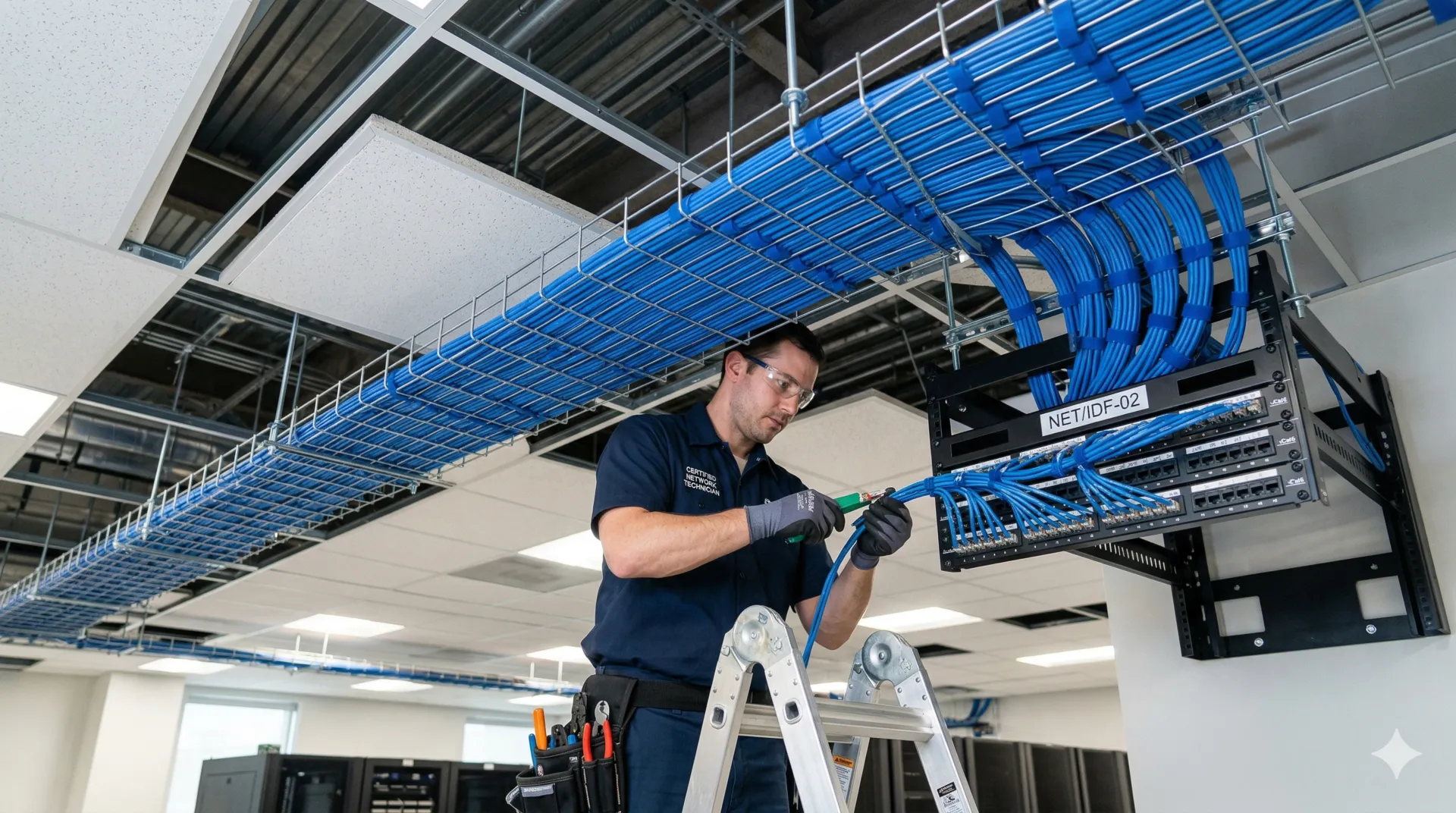
Cat6a makes sense for: server room connections, backbone runs between network closets, data-heavy environments (video production, engineering firms, medical imaging), runs longer than 55 metres where you need 10GbE, and any location where you're planning to support 10GbE switches now or within the next 5 years.
The trade-off: Cat6a cable is thicker and stiffer than Cat6, which makes it harder to route through tight spaces and requires larger conduit. Installation labour is slightly higher. But for backbone and high-performance runs, it's worth it.
When Fiber Is Necessary
Fiber optic cable uses light instead of electrical signals, which means it's immune to electromagnetic interference, supports vastly higher speeds, and works over much longer distances. It's also the only option for certain scenarios:
- Runs over 100 metres: Copper cabling (Cat5e/6/6a) maxes out at 100 metres. For anything longer — between buildings, across large campuses, between floors in tall buildings — fiber is the only option.
- Between buildings: Even if buildings are close, fiber is preferred for inter-building runs because it eliminates ground loop issues and lightning-induced surges that can damage copper equipment.
- Data centres and server rooms: Backbone connections between core switches need the bandwidth that only fiber provides.
- Backbone between floors: In multi-storey commercial buildings, fiber risers connect floor switches to the main distribution frame.
Fiber costs more per foot and requires specialized termination equipment, but where it's needed, there's no substitute.
Common Mistakes We See
Over-specifying: A 20-person office doesn't need fiber to every desk. We've seen quotes from other vendors recommending Cat6a or even fiber for simple desk drops in small offices. That's money spent with zero practical benefit.
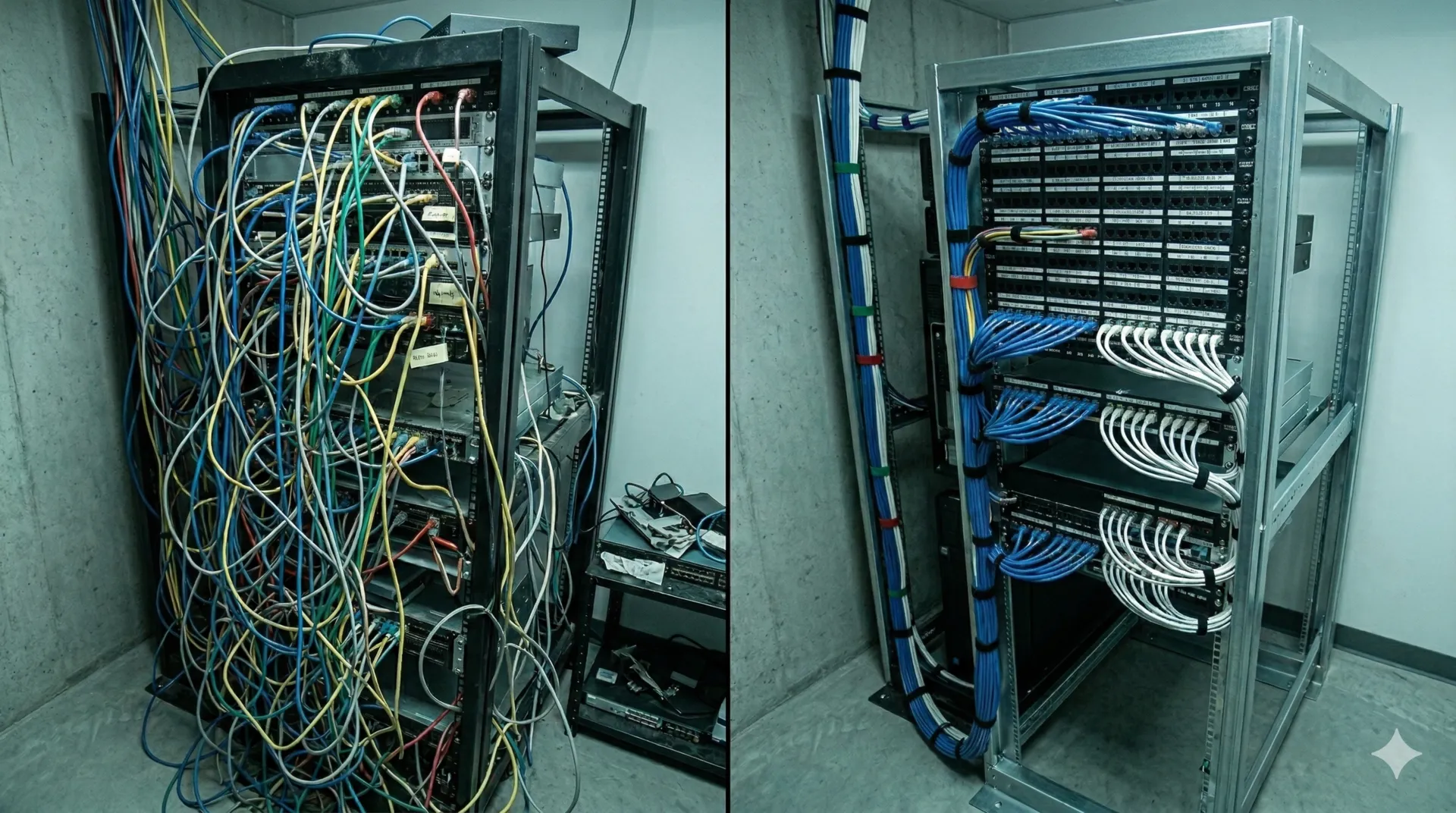
Under-specifying: Running Cat5e to a server room because "it's cheaper" means you'll rip it out and re-run Cat6a when you upgrade your switches to 10GbE. The cable is 40% of the cost — the labour to re-run it is 100% of the cost again.
Ignoring future needs: Cabling sits in your walls for 10–15 years. The marginal cost to go one step up at installation time is tiny compared to the cost of re-cabling later. Always think about what your network will need in 5 years, not just today.
Our Recommendation for Most Businesses
After cabling hundreds of commercial properties across Ontario, here's what we install most often:
- Cat6 for 90% of runs: Desk drops, wireless access points, security cameras, VoIP phones. It's the best balance of performance, future-proofing, and cost.
- Cat6a for backbone and server rooms: Runs between network closets, connections to servers, and any run over 55 metres where 10GbE is needed.
- Fiber between buildings and floors: Inter-building links, riser connections between floors, and data centre backbone.
This combination covers virtually every commercial scenario and balances cost against longevity.
Not Sure What You Need?
We assess your current infrastructure, understand your business requirements, and recommend the right spec for each run — not a one-size-fits-all answer. Whether you're building out a new office, expanding an existing network, or replacing aging cabling, we'll make sure you get exactly what you need without overspending.
Call us at (905) 550-0490 or use the contact form to schedule a free infrastructure assessment.