Open the network closet in most small businesses and you'll find the same thing: a tangle of cables draped over a shelf, a switch balanced on top of a modem, and a patch panel where nobody knows which port goes where. It works — until it doesn't. And when it doesn't, figuring out what went wrong takes longer than the actual fix.
The difference between professional cabling and what most businesses have isn't cosmetic. It directly affects your uptime, your troubleshooting speed, and how much your next upgrade costs.
What Bad Cabling Looks Like
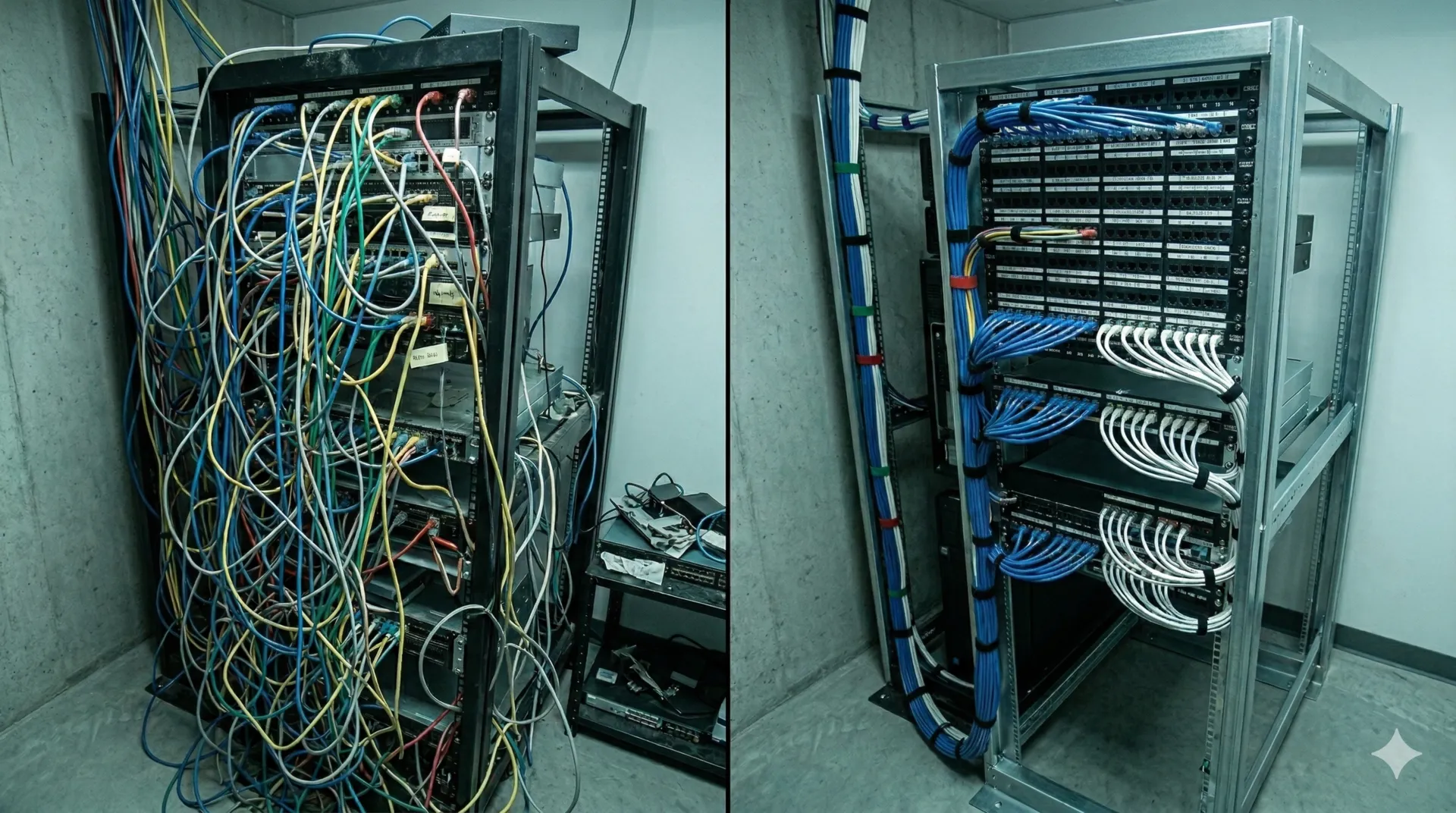
You've probably seen it. Maybe you're looking at it right now. Here are the telltale signs:
Unlabelled patch panels. There are 24 ports on the patch panel. Which one goes to the front desk? Which one feeds the security cameras? Nobody knows. The last person who knew left the company two years ago. When a port goes dead, the troubleshooting process is literally tracing a cable by hand through the ceiling — and that assumes you can even identify which cable is which in the bundle.
Cables draped across ceiling tiles and zip-tied to pipes. Instead of proper cable trays or J-hooks, cables are laid on top of drop ceiling tiles (which sag under the weight) or zip-tied to plumbing and HVAC pipes. This creates stress points that damage cables over time, makes it nearly impossible to add or remove individual runs, and violates fire code in most municipalities.
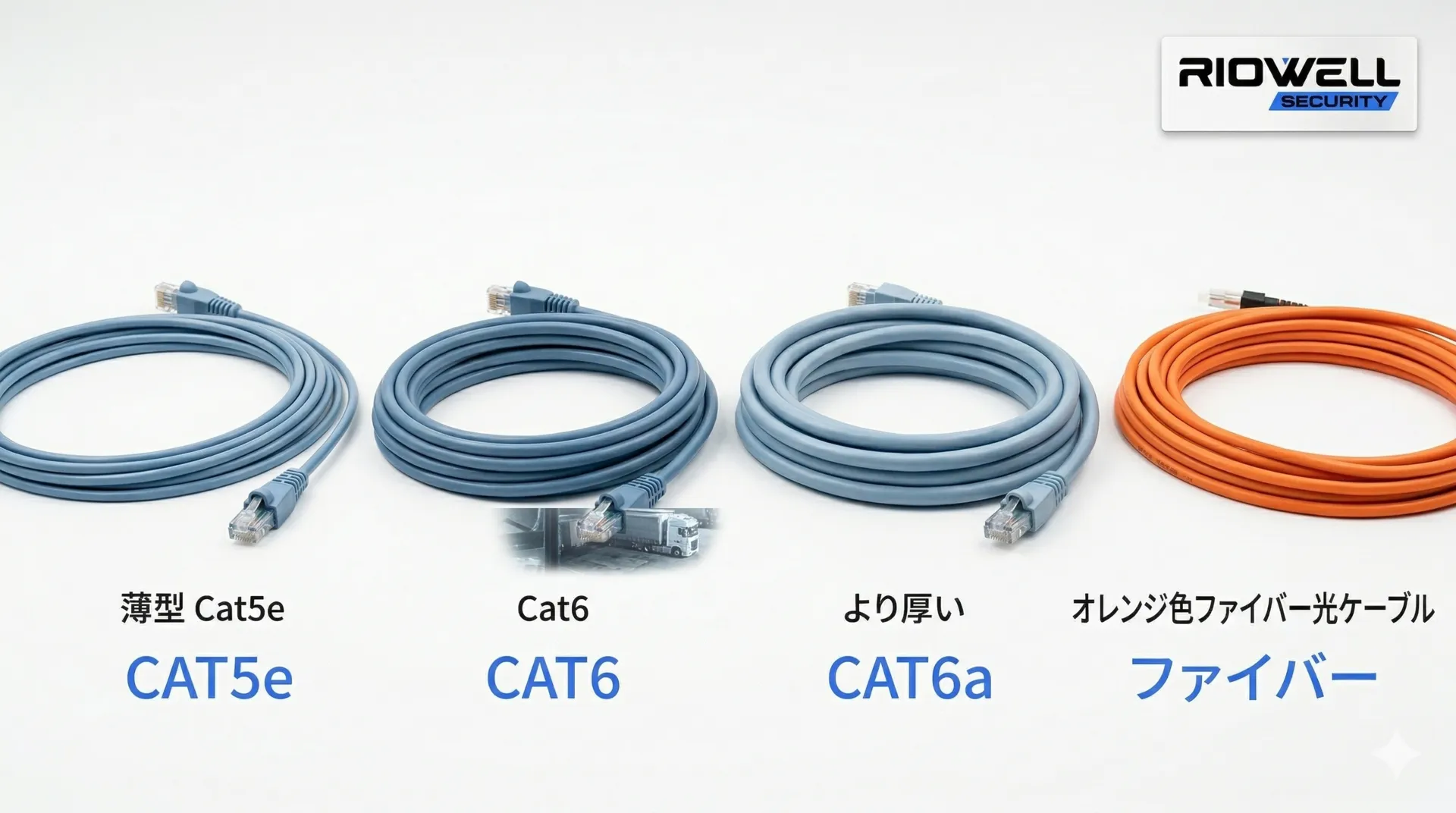
Mixed cable types with no documentation. Cat5, Cat5e, Cat6, and maybe some old Cat3 telephone cable — all in the same bundle, all unmarked. Some were installed in 2008, some in 2019. Nobody documented what type is where or what each run connects. When you try to upgrade to gigabit speeds, half the runs can't support it, and you don't know which half until you test every single one.
The network closet doubles as a storage room. The switch sits on a shelf next to boxes of printer paper and holiday decorations. There's no ventilation, no cable management, and the power bar is daisy-chained from another power bar. This isn't just messy — heat buildup causes equipment failure, and a cluttered closet makes every service call take twice as long.
What Good Cabling Looks Like
Professional cabling isn't complicated. It's methodical. Here's what you see when you open a properly done network closet:
Every port is labelled. Each outlet in the building has a label — "1F-07" means first floor, port 7. The matching port on the patch panel has the same label. The cable itself has the same label at both ends. A port map document (printed and stored in the closet, plus a digital copy) lists every port, its location, and what it connects to. When port 1F-07 goes dead, you know exactly where it is, what it feeds, and which cable to test. Troubleshooting time: minutes, not hours.
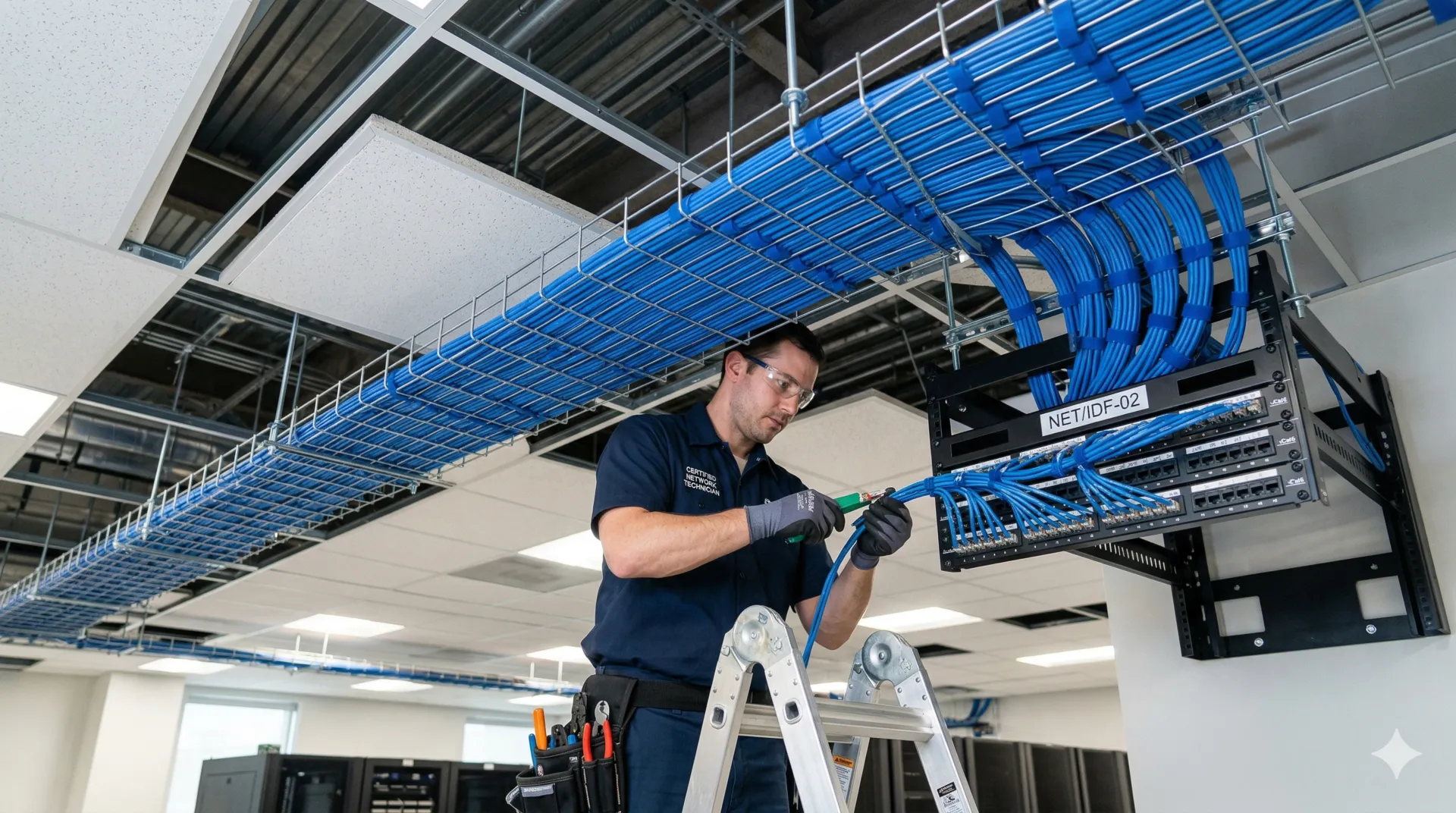
Proper cable pathways. Cables run through dedicated cable trays or are supported by J-hooks mounted to the building structure at proper intervals. No ceiling tiles used as cable supports. No zip ties to plumbing. Cables maintain proper bend radius around corners (no sharp kinks that degrade signal quality). Individual cables can be traced, accessed, and replaced without disturbing the rest of the bundle.
Consistent cable types. Every data run uses the same cable specification — Cat6 or Cat6a throughout, with the rating documented. No mystery cables, no mixed generations. When you need to support 10-gigabit in the future, you already know your cable plant can handle it because every run meets the same spec.
Clean rack with cable management. Equipment is mounted in a proper wall-mount or floor-standing rack with ventilation. Patch cables are routed through horizontal cable managers between the patch panel and switch. Velcro straps (never zip ties on patch cables — they over-tighten and damage the cable jacket) keep everything organized. Power is clean: a proper PDU (power distribution unit), not daisy-chained power bars.
Why It Actually Matters
Troubleshooting goes from hours to minutes. When everything is labelled and documented, any technician — even one who has never been to your site — can diagnose and fix a problem fast. No cable tracing, no guesswork, no trial and error.
Upgrades are plug-and-play. Need to add a new workstation? Check the port map, find the nearest unused port, plug in. Need to upgrade the switch? Unplug the patch cables in order, swap the switch, plug them back in. With proper labelling, this takes 20 minutes instead of half a day.
New technicians can understand the network immediately. Staff turnover and vendor changes are inevitable. When your cabling is documented, the new IT person or new managed service provider doesn't need weeks to figure out your network. They open the port map and they know everything. That saves you real money on every service call.
Compliance auditors care. If your business handles sensitive data — healthcare, legal, financial — auditors will look at your physical network infrastructure. Unlabelled, undocumented cabling is a finding. Proper cable management and documentation is an easy compliance win that costs nothing extra when done right during installation.
Get Your Cabling Done Right
Whether you're building out a new office, moving locations, or just tired of fighting with the spaghetti in your network closet — we do structured cabling the right way. Every run labelled, every port documented, every cable tested and certified. Call (905) 550-0490) or visit our networking and cabling page to get a free quote.