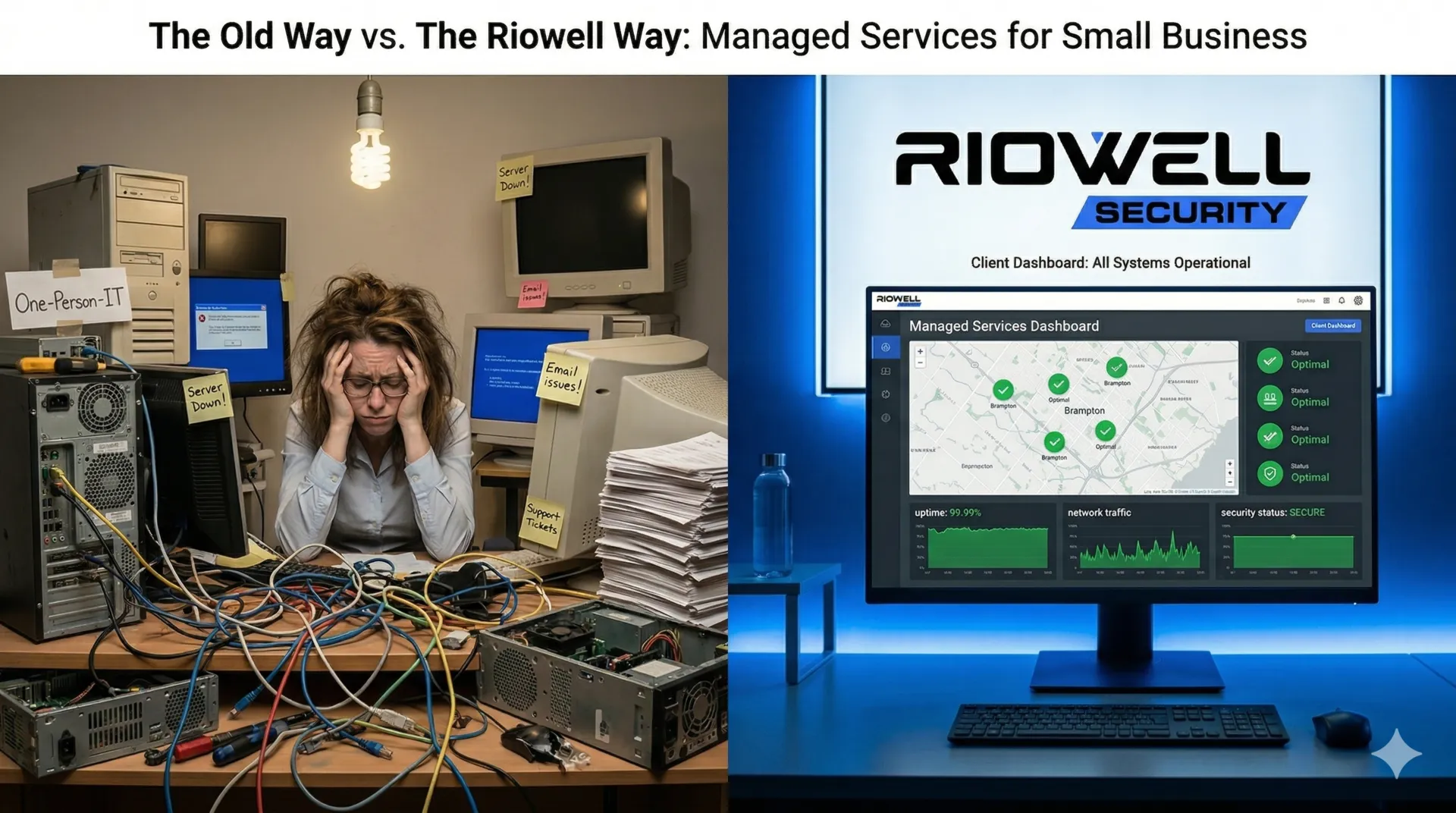
Every business is a technology business now. Your email, your files, your phone system, your point of sale, your security cameras — it all runs on networks, servers, and software. When any of it goes down, you're losing revenue. Managed IT services exist to prevent that.
What "Managed IT" Actually Means
Instead of calling someone when things break (break-fix model), managed IT means a team is proactively monitoring your systems 24/7. They apply patches, update firmware, monitor for threats, manage backups, and resolve issues — often before you even know there was a problem. It's the difference between reactive and proactive.
What's Typically Included
Network monitoring: 24/7 monitoring of your firewall, switches, access points, and internet connection. Endpoint management: Updates, patches, and antivirus for every computer and device. Backup and recovery: Automated daily backups with tested recovery procedures. Help desk: Phone and email support for your team's day-to-day IT questions. Security: Firewall management, email filtering, and threat detection. Vendor management: We deal with your ISP, phone provider, and software vendors so you don't have to.
What It Costs
Managed IT is typically priced per user per month: $100-200/user for comprehensive coverage. A 20-person office would pay $2,000-4,000/month. Compare that to a single full-time IT person ($60,000-80,000/year plus benefits) who can't provide 24/7 coverage, doesn't have expertise in every area, and takes vacation. Managed IT is a team for the price of a fraction of one person.
The Security Connection
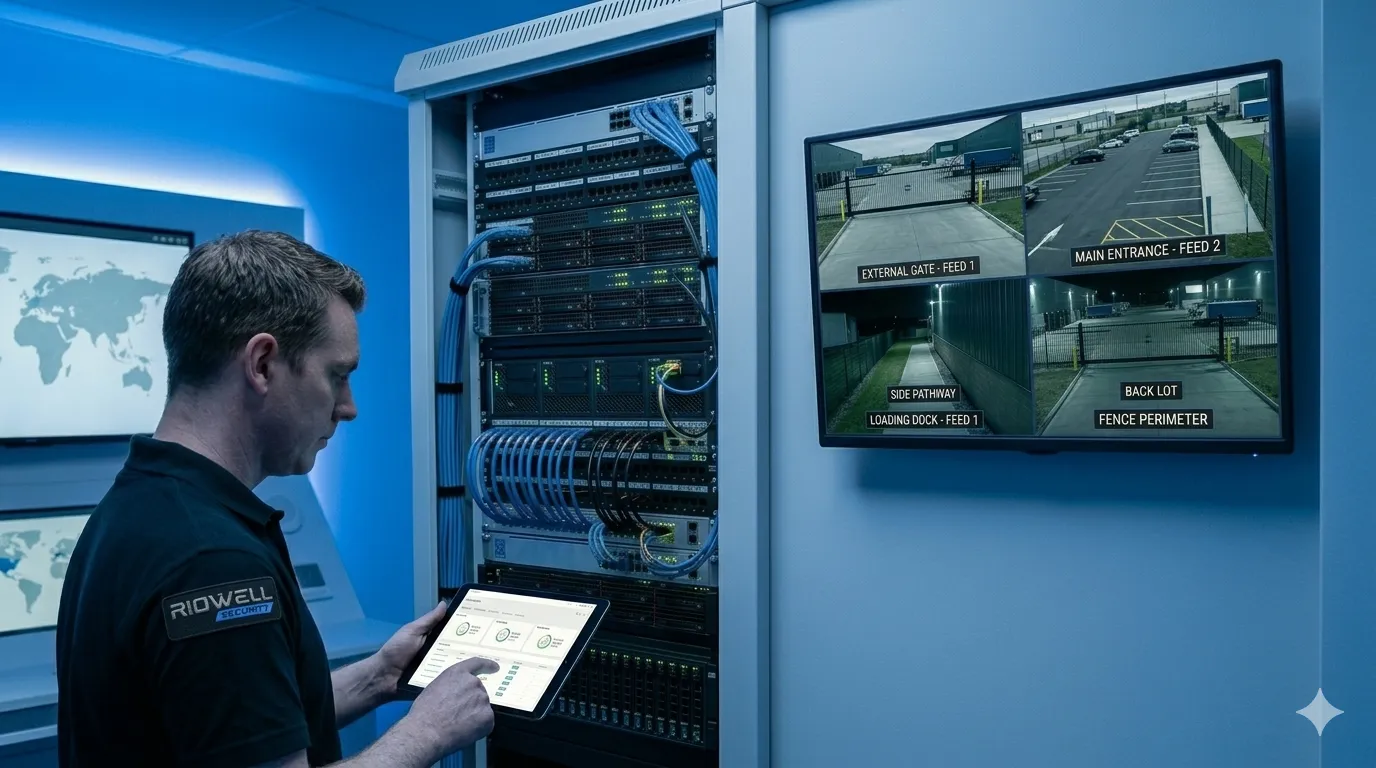
IT and physical security are converging. Your cameras run on your network. Your access control system needs reliable connectivity. Your alarm panel communicates over IP. Having one provider handle both IT and security means everything integrates properly, one team troubleshoots end-to-end, and you get one invoice instead of three.