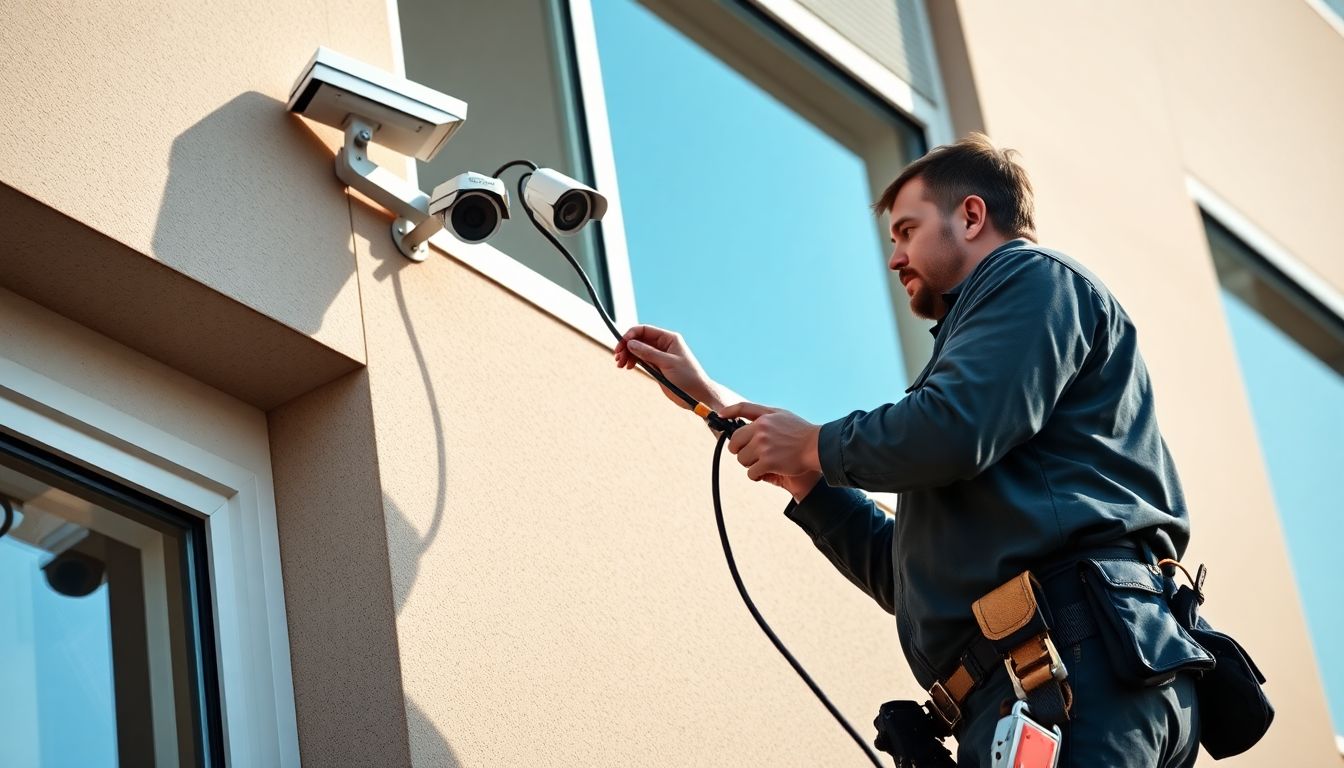
Most Ontario business owners install security cameras to deter theft or support investigations. Fewer realize that a properly documented, professionally installed camera system can also reduce what they pay for commercial insurance. The reduction depends on your insurer, your coverage lines, and how you document the system to your broker — but for businesses in higher-risk categories, the premium savings over several years can meaningfully offset the installation cost.
Which Coverage Lines Recognize Camera Systems
Not all commercial insurance covers respond equally to camera installations. Here's where you're most likely to see a benefit:
Commercial property insurance. Property insurers assess your risk of theft, vandalism, and fire when setting premiums. A monitored camera system — particularly one with after-hours surveillance and police dispatch capability — demonstrates that your property is actively protected and that incidents are more likely to be detected and responded to quickly. This reduces the insurer's exposure to high-value theft claims and is typically the coverage line with the most direct premium response to security improvements.
Commercial crime insurance. Crime coverage specifically covers theft, employee dishonesty, and burglary. Camera systems — especially those with interior coverage of cash handling areas and access-controlled stockrooms — are directly relevant to the risk calculation for crime coverage. If you carry crime coverage and you've improved your internal monitoring, that's a conversation worth having with your broker at renewal.
Commercial general liability (CGL). Some CGL underwriters recognize monitored camera systems as a risk mitigation factor for premises liability — the theory being that active monitoring makes you more likely to identify and respond to hazards that create slip-and-fall or other liability claims. This is less consistent than property or crime coverage, but worth raising.
Monitored vs. Unmonitored: What Underwriters Care About
There is a meaningful difference, from an underwriting perspective, between a camera system that records footage and a camera system with active monitoring.
A recording-only system provides evidence after an event. A monitored system provides deterrence, detection, and rapid response. For insurers, the value proposition is different: a monitored system is more likely to stop a theft before it completes, more likely to result in apprehension, and more likely to recover stolen property. These factors reduce the insurer's expected claim cost, which is what drives premium reductions.
If you have an unmonitored system and are considering adding monitoring, the insurance benefit is one more factor in that analysis. Ask your broker specifically how the addition of monitoring contract documentation would affect your renewal pricing.
What Documentation Your Broker Needs
Insurers won't reduce your premium based on your verbal description of a camera system. They need documentation. Provide your broker with:
- Installation invoice from the installing company, showing equipment specifications (number of cameras, resolution, NVR specs) and the installation date
- Monitoring contract, if applicable — the contract with your monitoring station, showing the service scope and response protocol
- Footage retention period — written confirmation (from your installer or your NVR configuration) of how many days of footage are retained. Most underwriters want to see a minimum of 30 days.
- Camera coverage diagram — a floor plan or site map showing camera positions and coverage areas. Your installer should be able to provide this. If they can't, that's a service gap worth noting.
Some insurers may also ask about camera specifications (resolution, night vision capability) and remote access capability. Have your installer's contact information available in case the underwriter has technical questions.
Timing: Renewal vs. Mid-Term
The most effective time to request a premium review based on security improvements is at renewal, when your underwriter is already re-rating your policy. Present your documentation package to your broker 60–90 days before renewal and ask them to specifically advocate for a rate reduction based on the security system upgrade.
Mid-term reviews are possible but less common. Most insurers will only adjust premiums mid-term in response to a material change in risk — and a significant security upgrade can qualify. The process typically requires your broker to submit a formal endorsement request. It's worth asking, especially if the installation was recent and renewal is more than six months away.
How to Frame the Ask
Your broker works for you, but they talk to underwriters regularly and know what resonates. Frame the conversation around risk reduction, not just equipment:
- What changed: "We installed a 16-camera commercial system covering all entrances, loading docks, and the stockroom, professionally installed with a 60-day NVR retention."
- The monitoring component: "We added 24/7 remote monitoring with police dispatch capability." (if applicable)
- What you're asking for: "I'd like you to present this documentation to our underwriter and request a formal review of our property and crime premiums."
Most brokers are happy to have this conversation — it demonstrates that you're managing your risk actively, which makes you a better client. If your broker is dismissive about the potential benefit, it's worth getting a second opinion at renewal. Premium reductions of 10–20% on relevant coverage lines are real outcomes for businesses in higher-risk categories with well-documented security systems — but only if someone actually asks.