The security camera market is full of installers. Electricians who've added cameras to their service menu, IT companies that handle cameras as an afterthought, alarm dealers who sub-contract the camera work, and dedicated commercial security integrators who do this full-time. The hardware on the shelf is more standardized than it's ever been. What separates a good installation from a bad one isn't the camera brand — it's whether the person designing and installing the system understands commercial security environments and stands behind their work.
Here's what to ask before you sign anything.
The 8 Questions
1. Are you licensed in Ontario?
In Ontario, companies that install security systems — including camera systems integrated with alarms — are required to be licensed under the Private Security and Investigative Services Act, 2005 (PSISA). This applies to companies that install equipment connected to a monitoring station or that have an investigative component. Ask for the licence number and verify it through the Ministry of the Solicitor General's public registry.
Some installers operate in a grey zone, arguing that stand-alone camera systems don't require a licence. That may or may not hold depending on the installation. A licensed company is accountable to a regulatory body. An unlicensed one isn't. Know what you're dealing with.
2. Do you conduct a site assessment before quoting?
Any installer who quotes you a camera system without walking your property first is guessing. The number of cameras, their types, mounting heights, cable runs, and NVR placement all depend on the physical reality of your site — your lighting conditions, sightlines, entry points, building materials, and the specific activities you need to monitor. A proper quote can only follow a proper site assessment.
A phone quote or an online form that generates an instant price is not a quote — it's a product sales pitch with a number attached.
3. Do you provide a written coverage map or camera placement diagram?
A good installer gives you a drawing — floor plan or site map — showing where every camera will be positioned, what field of view it will cover, and what it's designed to capture. This gives you something to review before installation and something to hold the installer to after. It also protects you: if the coverage map shows that the back dock is covered and the installed system doesn't actually cover it, you have written documentation of the discrepancy.
4. What's your labour warranty?
Hardware warranties are set by manufacturers — typically 2–5 years on commercial cameras and NVRs. The question is what happens when something fails at 14 months and the manufacturer says it's covered, but the installer says they charge a service call to come out. Get the labour warranty in writing. A minimum of 1 year on labour is reasonable; 2 years is better. Understand exactly what triggers a warranty call vs. a billable service visit.
5. Who handles monitoring, and how does it work?
If monitoring is part of the proposal, ask specifically: who operates the monitoring center, where is it located, what is the response protocol when an event is detected, and what are the response time standards? Some alarm dealers resell monitoring through third-party centers they've never visited. The monitoring chain matters for response quality.
If monitoring isn't part of the proposal and you want it later, ask whether the camera system is compatible with third-party monitoring integration.
6. What is the footage retention period and how is it configured?
Thirty days is the practical minimum for most commercial applications; 60–90 days is better for businesses with inventory liability or ongoing loss issues. Ask how retention is configured on the NVR, whether the system is set to overwrite or alert when storage is full, and whether remote access to historical footage requires you to be on-site or can be done from a phone or laptop. These aren't advanced questions — any competent commercial installer should answer them without hesitation.
7. Can you provide references from similar commercial installations?
A retail store, a warehouse, and a construction site are three different problems. Ask for references from installations similar to yours in scope and environment. A company that installs primarily residential systems may lack experience with the specific challenges of your commercial environment — lighting conditions, camera types, network integration, coverage distances.
8. What happens if a camera fails?
Commercial camera systems occasionally have hardware failures. The question is the response: how fast will they come out, is a temporary replacement provided, and does downtime void any monitoring SLA? Get the service response commitment in writing, especially if monitoring is part of the contract.
Red Flags
A quote delivered without a site visit. No legitimate commercial installer quotes a system without seeing the property. A phone quote is a sales tactic, not a security proposal.
No written proposal. Verbal agreements for commercial security installations create disputes. Scope, equipment list, labour, warranty, and monitoring terms should be in writing before any work begins.
Pressure to sign the same day. A same-day discount or a claim that the price expires tonight is a sales pressure tactic. A security system you'll live with for 5–10 years warrants a few days of consideration.
Consumer-grade equipment presented as commercial. Ring, Arlo, Nest, and similar brands are residential products. If an installer proposes these for a commercial application, they're either uninformed or cutting costs at your expense. Commercial environments require commercial-grade hardware with proper weather ratings, ONVIF compatibility, and H.265 compression.
No mention of existing network infrastructure. Camera systems run on your network. An installer who doesn't ask about your network setup — switch capacity, bandwidth, router configuration — either plans to install their own separate network (which creates long-term management problems) or hasn't thought about it.
What a Proper Site Assessment Looks Like
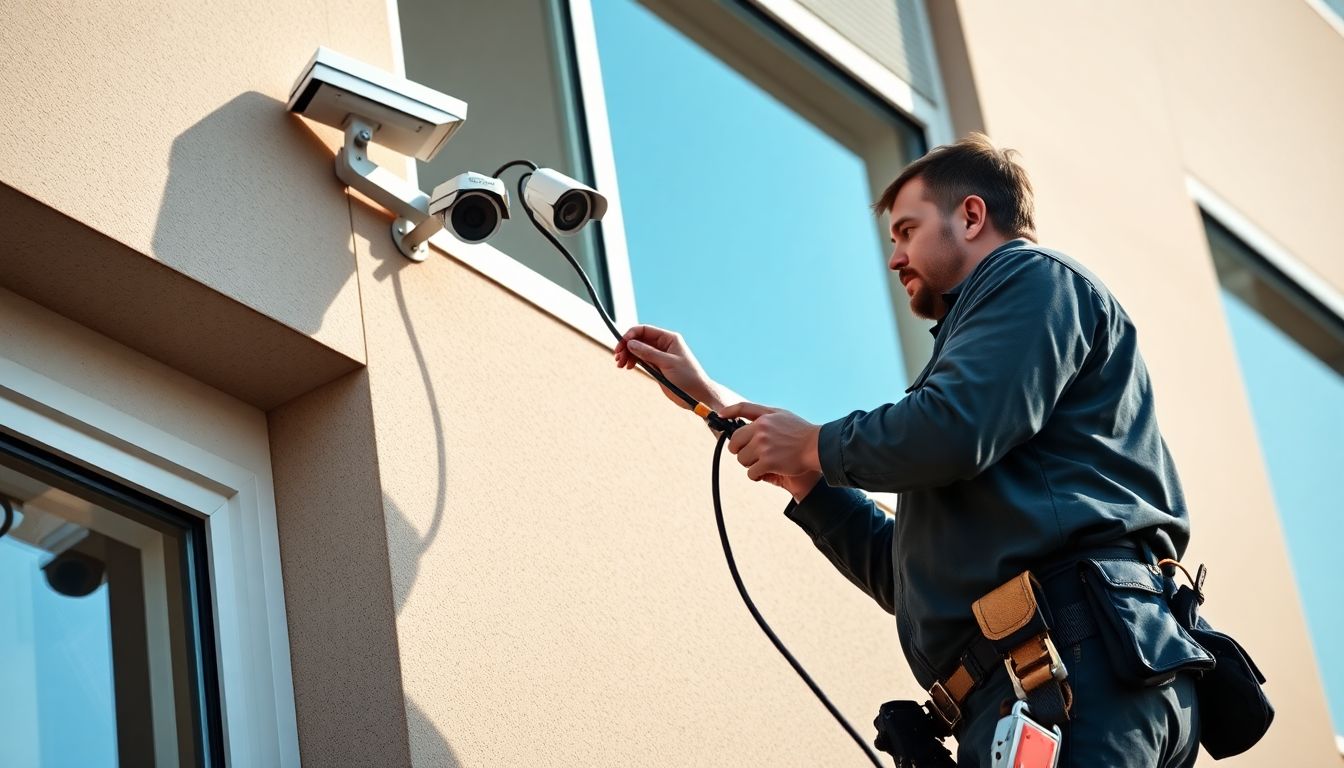
A thorough site assessment takes 30–90 minutes depending on property size. The installer should physically walk every area that needs coverage, check mounting surfaces and heights, note lighting conditions at relevant times of day, identify power availability at each camera location, assess cabling routes, and discuss with you what specific events or activities you need to capture and in what level of detail. From that assessment, they should be able to explain the coverage logic — not just where cameras go, but why each one is positioned the way it is and what it's designed to do.
An installer who walks your property in 10 minutes and emails you a quote the same afternoon hasn't done a site assessment. They've done a sales visit.