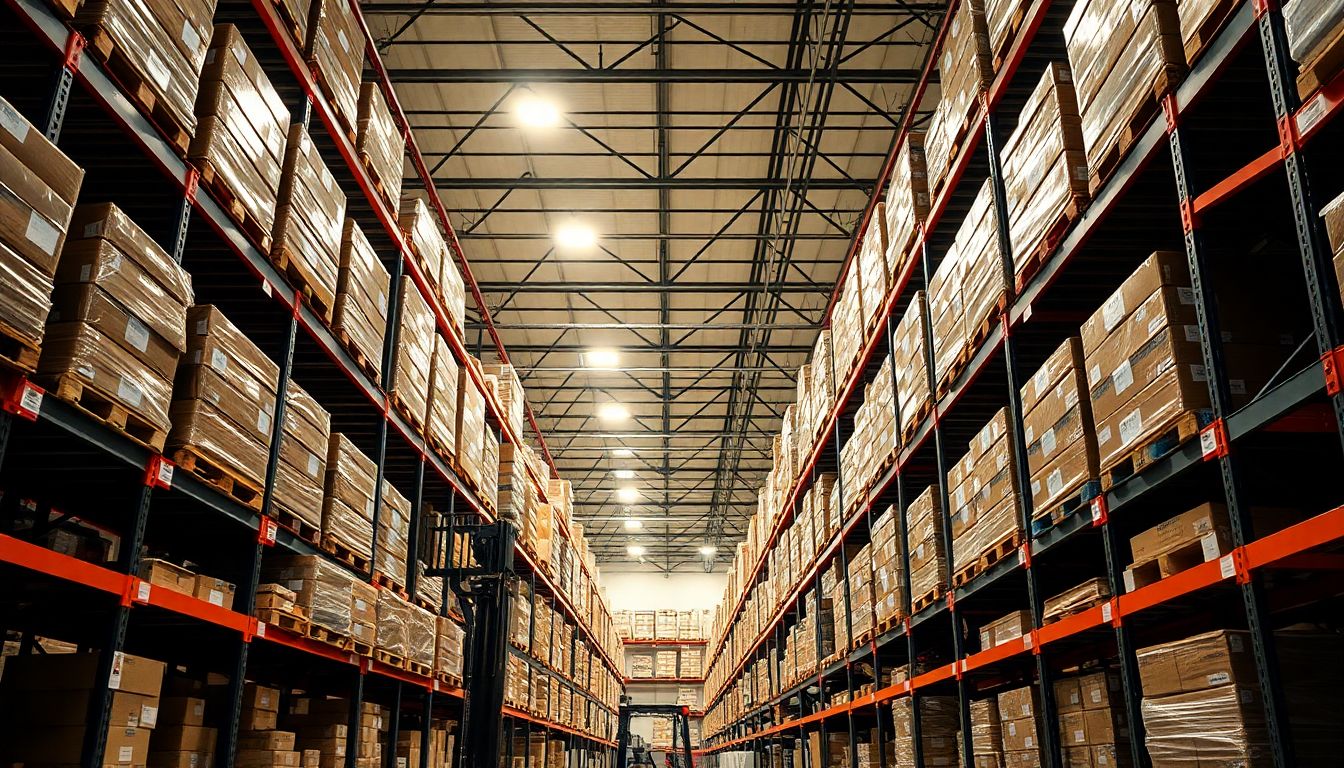
Inventory shrink in Canadian warehouses consistently runs between 1% and 3% of revenue — a figure that looks manageable on a quarterly report until you calculate the gross margin impact. A warehouse doing $10 million in annual throughput absorbing 2% shrink is losing $200,000 per year to theft, damage, and error. What makes warehouse theft particularly damaging is that it comes from two directions simultaneously: external theft that happens when the building is closed, and internal theft that happens when it's fully staffed.
Most warehouse security deployments only address one of these vectors. A camera system positioned at dock doors and exterior perimeter coverage handles external threats. It does almost nothing for the internal theft happening during shift hours — the product that walks out in an employee's bag, the pallet that gets short-shipped on a falsified manifest, the items that never make it to the receiving count.
The External Threat at Ontario Warehouses
After-hours break-ins at Ontario warehouses follow a pattern that experienced security operators recognize immediately. Entry through a dock door or a service entrance on the non-camera side of the building. Rapid selection of high-value SKUs — electronics, pharmaceuticals, branded consumer goods — that have been identified in advance. Exit before any response can occur.
Dock doors are the primary entry point. Older roll-up dock doors with worn seals and aging locking mechanisms can be forced in under five minutes. Entry through dock doors avoids the glass-break and contact sensors typically installed on office windows and personnel entrances — meaning the intrusion may not trigger any alarm at all.
Distribution and e-commerce warehouses near the 400-series corridors are particularly targeted because their freight profile is well-known to organized theft rings. A warehouse that services major retail clients moves predictable, high-value product on a predictable schedule.
The Internal Threat at Ontario Warehouses
Internal theft in warehouses takes forms that standard camera systems aren't designed to catch.
Short-shipping. A picker deliberately shorts a pallet by a case or two, the receiving party at the next node signs for the pallet as complete, and the case disappears. Without camera coverage of the packing and palletizing area combined with weight-check or case-count verification, this is extremely difficult to detect.
Manifest manipulation. A receiving employee records fewer units on the inbound count than were actually received, releasing the surplus into personal channels. Most camera systems have no sight line into the actual count being entered into the WMS.
Walking product out. In high-traffic warehouses with large workforces, it is routine for small items to exit in bags, lunch containers, and personal vehicles. Without camera coverage at staff exits and vehicle exits — combined with bag-check policy — this is effectively unmonitored.
Collusion with drivers. A driver and a warehouse employee coordinate to have the driver "return" to pick up a forgotten item or a pallet that was allegedly mis-sorted. The item or pallet is warehouse inventory. This scheme is nearly impossible to detect without camera coverage of all dock interactions and a strict dock access policy for non-authorized personnel.
Common Security Gaps at Ontario Warehouses
Camera coverage of dock doors without coverage of the dock interior. Exterior cameras capture a vehicle pulling up to the dock. Interior cameras covering the dock staging area capture what actually moves through the door. Most warehouses have the exterior camera but not the interior coverage.
No after-hours intrusion monitoring on dock doors. Monitored contacts on dock doors with immediate alert to a monitoring station are inexpensive. Most legacy systems don't have them.
No camera coverage at staff exits. The building exit used by warehouse staff — particularly at shift end — is frequently uncovered. This is the primary channel for product walking out.
Inadequate retention. Internal theft schemes typically run for weeks or months before discovery. Investigating them requires footage that is often older than the 14-day retention on most basic NVR setups. Thirty days minimum is required; 60 days is better for warehouses with high internal risk.
What Properly Secured Warehouses Look Like
Effective warehouse security integrates coverage of the external perimeter with internal operational coverage. Dock doors have both exterior and interior camera coverage, with monitored contacts triggering immediate after-hours alerts. Staff exits have camera coverage. The packing and palletizing area has camera coverage.
Access control separates the building into zones — office, warehouse floor, high-value storage, dock area — with different access levels for different roles. A driver entering the dock has no reason to be in the warehouse interior. An access control system enforces that boundary and logs every crossing.
After-hours protection uses motion-triggered alerts to a live monitoring station rather than just a recording system. The warehouse that looks like it has cameras but doesn't have anyone watching them is still a soft target.
For a detailed breakdown of security systems designed for Ontario warehouses, see our warehouse security page.