Scrap and recycling yards in Ontario hold inventory with a property that most other commercial operations don't: it's immediately liquid. Copper wire, aluminum extrusion, non-ferrous metals, and catalytic converters can be resold quickly and with minimal traceability. This makes scrap yards a consistent target for organized theft — not just the occasional opportunistic break-in, but coordinated operations by groups that know the commodity value of what they're taking and have the market channels to move it.
Ontario's scrap industry also operates in a regulatory environment shaped partly by the province's Residential Tenancies Act amendments and municipal anti-theft ordinances, many of which emerged in response to metal theft patterns that were generating significant losses across infrastructure, construction, and commercial sectors. Scrap yard operators who maintain proper purchase documentation and camera coverage are not just protecting their own inventory — they're part of the province's metal theft traceability chain.
The Threat Landscape for Ontario Scrap and Recycling Yards
Catalytic converter theft rings. Ontario has documented a sustained market for stolen catalytic converters driven by the value of the platinum-group metals inside them. Theft rings acquire converters from vehicle theft and from targeted cutting operations at parking lots and dealerships, then bring them to scrap dealers for sale. Converters are the highest-value-per-unit commodity that enters the scrap stream, and they are the primary driver of organized theft activity that intersects with scrap yard operations. Ontario's regulations require scrap dealers to record identification for catalytic converter transactions — camera coverage of the purchase counter is the documentation backbone for this compliance obligation.
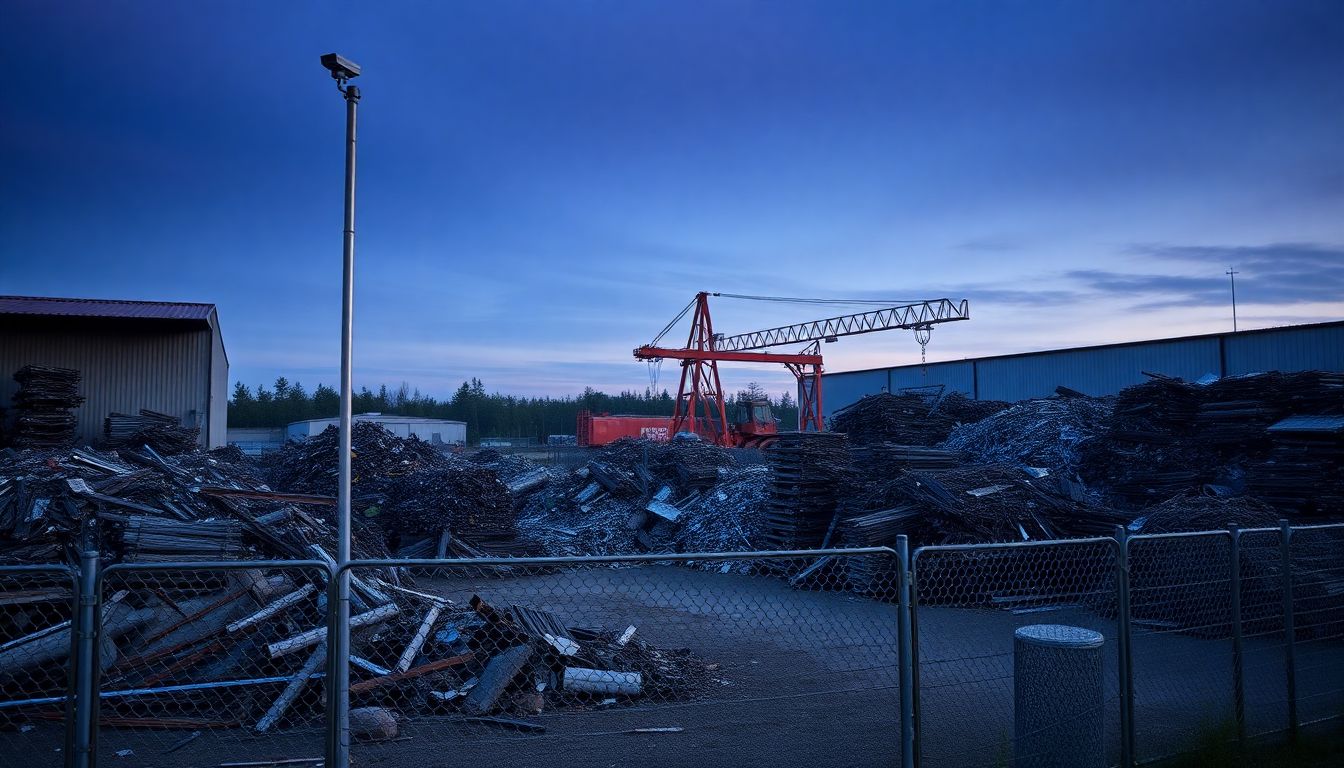
Night entry into the yard. Scrap yards with accessible perimeters are entered at night by individuals and small groups who steal from the sorted metal piles — copper, aluminum, and non-ferrous concentrations that represent the highest value per kilogram. A yard that has processed and sorted its intake but hasn't moved it to locked or more secured storage is a predictable target for anyone who has done reconnaissance on the operation.
Theft from vehicles on the property. Scrap yards that accept vehicle donations or purchase whole vehicles as feedstock hold vehicles that may still contain valuable components — not just catalytic converters, but wiring harnesses, batteries, and aluminum wheels. Access to the vehicle storage area by individuals who shouldn't be there is a consistent theft vector.
Internal theft from the purchase counter. The purchase counter at a scrap yard handles significant cash transactions. Internal theft — overpayment to known sellers who split the difference, underweighing purchases and pocketing the surplus, or straightforward cash skimming — requires camera coverage of the scale and the transaction to detect and deter.
Common Security Gaps at Ontario Scrap Yards
Perimeter that can be accessed from multiple points. Scrap yards are typically large, with perimeter fencing that may have multiple gaps, vehicle-width gate openings that aren't fully controlled after hours, and fence sections that haven't been inspected recently. Organized theft groups identify the accessible perimeter points during reconnaissance. A perimeter that was adequate when the yard was smaller may have grown into a security gap as operations expanded.
Camera coverage of the scale but not the yard interior. Most scrap yard camera systems are concentrated at the purchase entrance and the scale area — where high-value commodity transactions occur. The yard interior — sorted metal piles, vehicle storage, container staging — is frequently uncovered. This is where night-entry theft occurs.
No after-hours monitoring. Recording cameras in a large outdoor yard don't prevent anything. The person inside the perimeter at 2 AM has no detection risk if no one is watching the camera feed. Motion-triggered alerts to a monitoring station — with audio challenge capability deployed through on-site speakers — convert a recording system into a deterrence system. Most Ontario scrap yards don't have this.
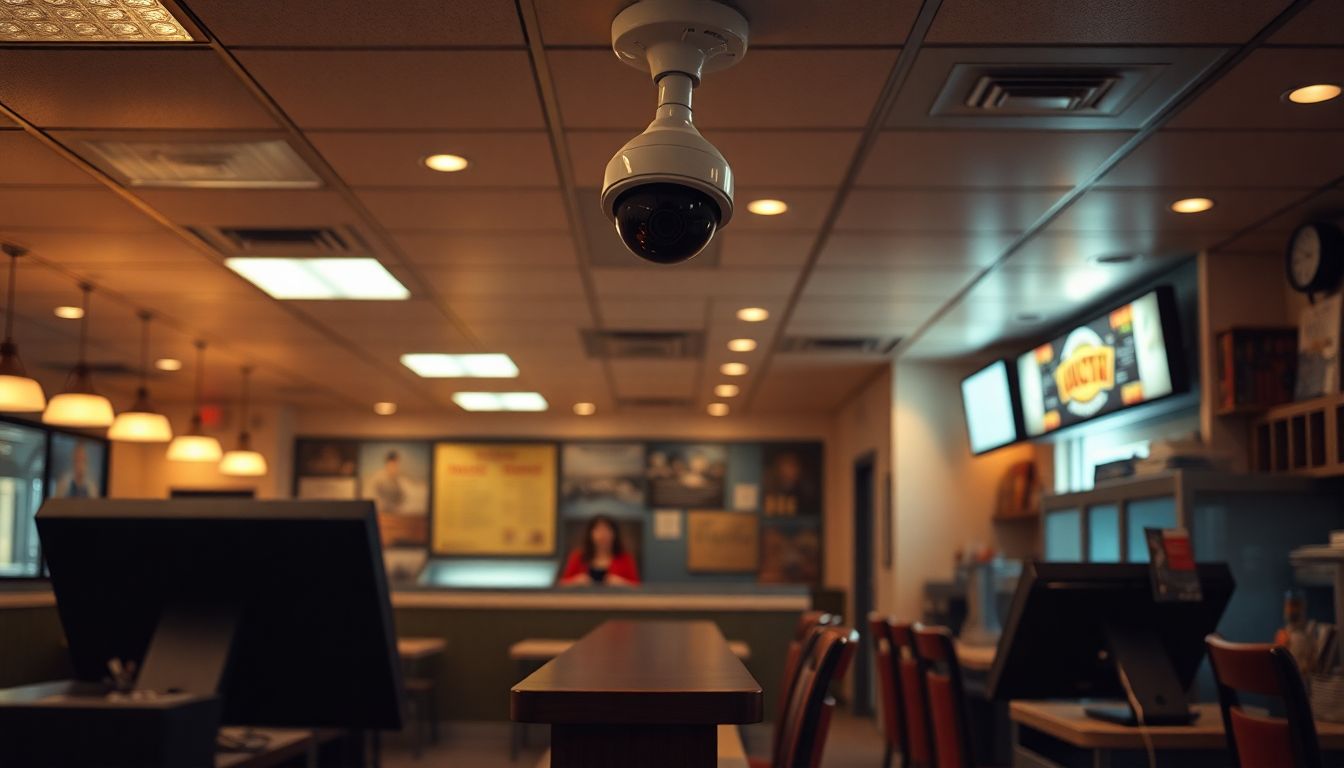
Purchase counter camera that doesn't capture both the scale display and the seller. The traceability requirements for metal purchases — particularly catalytic converters — depend on capturing seller identity documentation alongside the transaction. A camera covering the transaction area needs to see the ID being presented, the scale display, and the cash transaction simultaneously. This requires deliberate camera positioning that most installations don't achieve.
Inadequate lighting in the yard interior. Outdoor scrap yards at night are dark. Camera systems without adequate IR illumination or supplemental lighting produce footage that is effectively useless for identification. The coverage gap at night is where most theft occurs.
What Properly Secured Ontario Scrap Yards Look Like
Effective scrap yard security operates across three zones: the perimeter, the purchase counter, and the yard interior.
The perimeter has full fencing with no unauthorized access points. The vehicle gate is powered and controlled, with camera coverage capturing licence plates at entry and exit. After hours, the perimeter is on an alarm zone. Any unauthorized gate opening or fence breach generates an immediate alert to a monitoring station.
The purchase counter has camera coverage positioned to capture seller identification, the scale display, and cash transactions simultaneously. All catalytic converter transactions are documented with this coverage as the photographic record associated with the required written transaction log. The cash handling area is covered by a separate camera and has a panic alarm for staff safety.
The yard interior has distributed camera coverage — towers or elevated mounting positions that provide wide-area coverage of sorted metal storage, vehicle staging, and container areas. After-hours motion in the yard triggers an alert to a monitoring station with audio challenge capability. The monitoring operator can immediately assess whether the motion is a night entry or a legitimate after-hours operation.
Lighting throughout the yard supports camera performance during the overnight window. Sorted high-value metals — copper, non-ferrous concentrations — are stored in locked containers or enclosed areas where possible, behind the yard's outer perimeter security layer.
For a detailed breakdown of security systems designed for Ontario scrap and recycling yards, see our scrap recycling yard security page.