Ontario auto dealerships have experienced a sustained increase in three distinct theft categories over the past several years, each with a different profile, a different risk window, and a different security response. Treating dealership security as a single problem — "put cameras on the lot" — misses two of the three vectors entirely. Dealers who understand the threat breakdown can protect themselves more effectively and at lower cost than dealers who install a generic camera system and assume the problem is solved.
Three Distinct Theft Vectors at Ontario Dealerships
Catalytic converter theft. Catalytic converters on trucks, SUVs, and hybrid vehicles contain platinum, palladium, and rhodium — metals with significant scrap value. A converter can be cut from a vehicle in under two minutes with a battery-powered reciprocating saw. Ontario dealership lots — with dozens of uniformly elevated SUVs and trucks parked in predictable rows — are more efficient targets than residential driveways. Theft typically occurs between midnight and 4 AM on weekends, when dealer response and law enforcement presence are lowest.
Test drive vehicle theft. This is a fraud-based theft method that has become increasingly common at Ontario dealerships. A prospective buyer presents identification — which may be fraudulent — takes a test drive, and does not return. Alternatively, a buyer completes a legitimate purchase using fraudulent financing, takes delivery of the vehicle, and disappears. The vehicle is then either used directly or stripped and resold through salvage channels.
After-hours showroom and office break-ins. Showrooms hold keys, key fobs, and the key cabinets for every vehicle on the lot. A break-in that accesses the key cabinet can result in multiple vehicles being taken in a single incident. Dealership offices also hold customer personal information, financial documents, and occasionally cash — making them targets independent of the vehicle inventory.
What Dealership Camera Systems Miss
Most dealership camera installations focus on lot coverage — perimeter cameras that capture the overall inventory area. This handles one threat profile partially. It doesn't handle the others.
Catalytic converter theft and basic lot cameras. Low-mounted wide-angle cameras covering a lot of 200+ vehicles provide footage that typically cannot identify individuals committing catalytic converter theft. The angle is wrong, the resolution is insufficient at distance, and the underside of the vehicle — where the converter is being cut — is never in frame. Effective catalytic converter deterrence requires cameras positioned to capture individuals working under vehicles, combined with motion detection and after-hours monitoring that triggers a response within minutes of activity.
Test drive fraud and camera coverage. Cameras don't prevent test drive fraud — they document it after the fact. The countermeasures for test drive fraud are procedural: mandatory identification verification with a documented check-in process, a policy that keys are held while identification is being reviewed, and GPS tracking on all vehicles used for test drives.
Key cabinet security. The key cabinet is the highest-value single target in any dealership. A break-in that accesses an unsecured key cabinet can result in 10 or 20 vehicles being driven off the lot before morning. Key cabinets should be in a separate locked room, covered by a dedicated camera, and alarmed independently — so a break-in targeting the key cabinet triggers a distinct alarm before the vehicles are accessible.
Common Gaps at Ontario Auto Dealerships
After-hours monitoring void. Most dealership camera systems are recording-only. There is no monitoring station watching for overnight activity. A catalytic converter theft that triggers motion detection at 2 AM generates an alert that goes to a phone that isn't answered until morning. Live monitoring with sub-5-minute response capability is what converts camera coverage from a documentation system to a deterrence system.
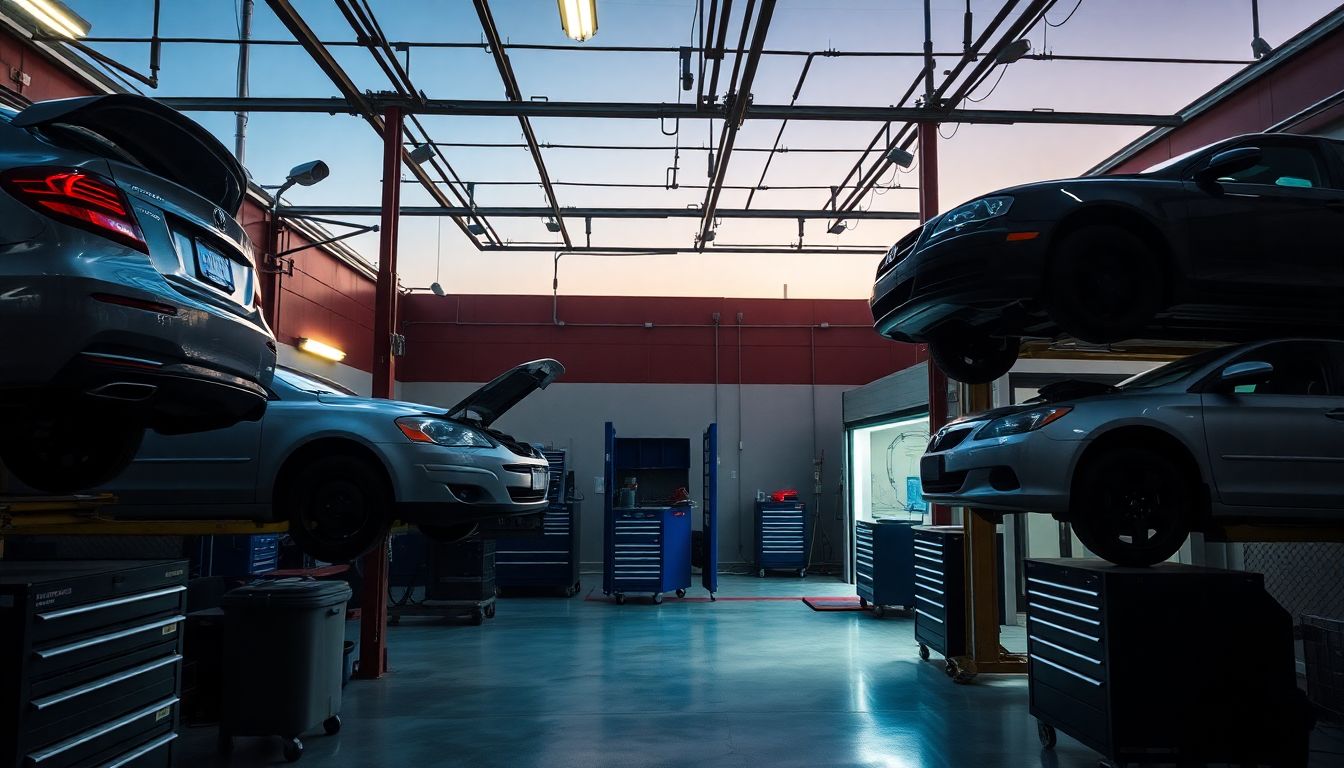
Service bay coverage gap. The service and parts area — which holds customer vehicles, parts inventory, and expensive shop equipment — is frequently less well-covered than the showroom and front lot. Customer vehicles in the service bay represent a liability relationship: damage or theft to a customer vehicle in your care is your problem. Camera coverage of the entire service bay and customer vehicle storage area is not optional.
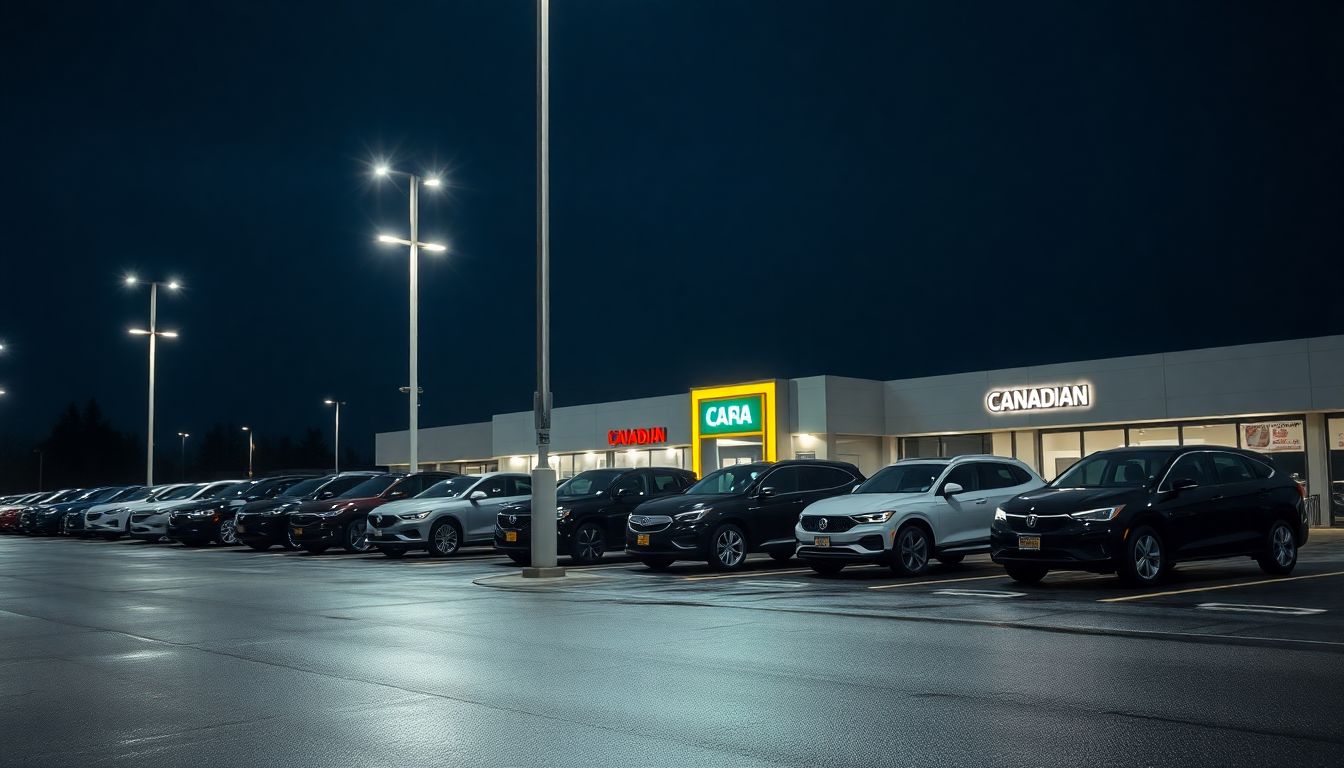
No perimeter lighting in coverage zones. Outdoor camera systems without adequate lighting — either on-site flood lighting or IR illumination on cameras — produce footage that is nearly useless for identification at night. Catalytic converter thieves work at night, and footage from underlit lots showing dark figures near vehicles provides nothing actionable for law enforcement.
GPS on display inventory but not service loaners. Many Ontario dealers have GPS on their inventory — either factory-installed or dealer-added. Service loaners and test drive vehicles are often excluded. These vehicles leave the property routinely and return without documentation of where they've been or who drove them.
What a Properly Secured Ontario Dealership Looks Like
Effective dealership security addresses all three threat vectors with tailored countermeasures. The lot is covered by high-resolution cameras with adequate IR illumination, positioned to capture individuals at vehicle undercarriage level as well as overall lot overview. After-hours motion detection sends alerts to a live monitoring station with the authority to deploy audio deterrents and contact police.
The key cabinet is in a separate locked room with its own alarm zone and dedicated camera coverage. A break-in that reaches the key cabinet area triggers an immediate high-priority alarm — not the same alert as a parking lot motion event.
Test drive procedures include mandatory ID verification, GPS-tracked test vehicles, and keys-held policy during ID review. The process is documented and consistent regardless of how promising the buyer appears.
Service bays have full camera coverage of customer vehicle staging, the service write-up area, and the parts counter. Customer vehicle check-in and check-out is documented with timestamped camera footage at the point of key handover.
For a detailed breakdown of security systems designed for Ontario auto dealerships, see our auto dealership security page.