Ontario is one of the highest-risk jurisdictions for cargo theft in North America. The province sits at the intersection of major trade corridors — the 401, the 400 series, and the US border crossings at Windsor, Niagara, and Thousand Islands — and it has a mature organized crime infrastructure with well-established connections to freight brokers, warehouses, and transportation networks that can move stolen goods quickly.
Équité Association, which tracks cargo theft for the Canadian insurance industry, consistently identifies Ontario as the province with the highest cargo theft volume. The theft landscape has also changed — organized rings have largely moved beyond blunt force approaches (cutting trailers open in parking lots) to sophisticated fraud and social engineering that defeat most conventional security measures.
What Organized Cargo Theft Looks Like in 2026
Fictitious pickup. A theft ring creates fraudulent carrier credentials — a fake dot number, forged insurance, spoofed dispatch emails — and books a legitimate load through a freight broker. The "carrier" shows up with proper documentation, picks up the freight, and disappears. The shipper and broker don't realize anything is wrong until the consignee calls to say the load never arrived. This type of fraud is increasingly common in Ontario's produce and pharmaceutical corridors.
GPS jamming. Cargo thieves in Ontario have access to GPS jammers that are cheap, widely available, and effective. A jammer mounted in the cab of a following vehicle can knock out trailer tracking for the window needed to redirect a load to a secondary location. If your only in-transit security layer is a single GPS tracker, you have a meaningful vulnerability.
Insider intelligence. The most damaging cargo thefts involve inside information — a dispatcher, driver, or dock worker who knows what high-value loads are moving, when, and with which carrier. Pharmaceutical, electronics, and high-value consumer goods loads are particularly targeted. Insider-assisted thefts are rarely detected until the investigation is well underway.
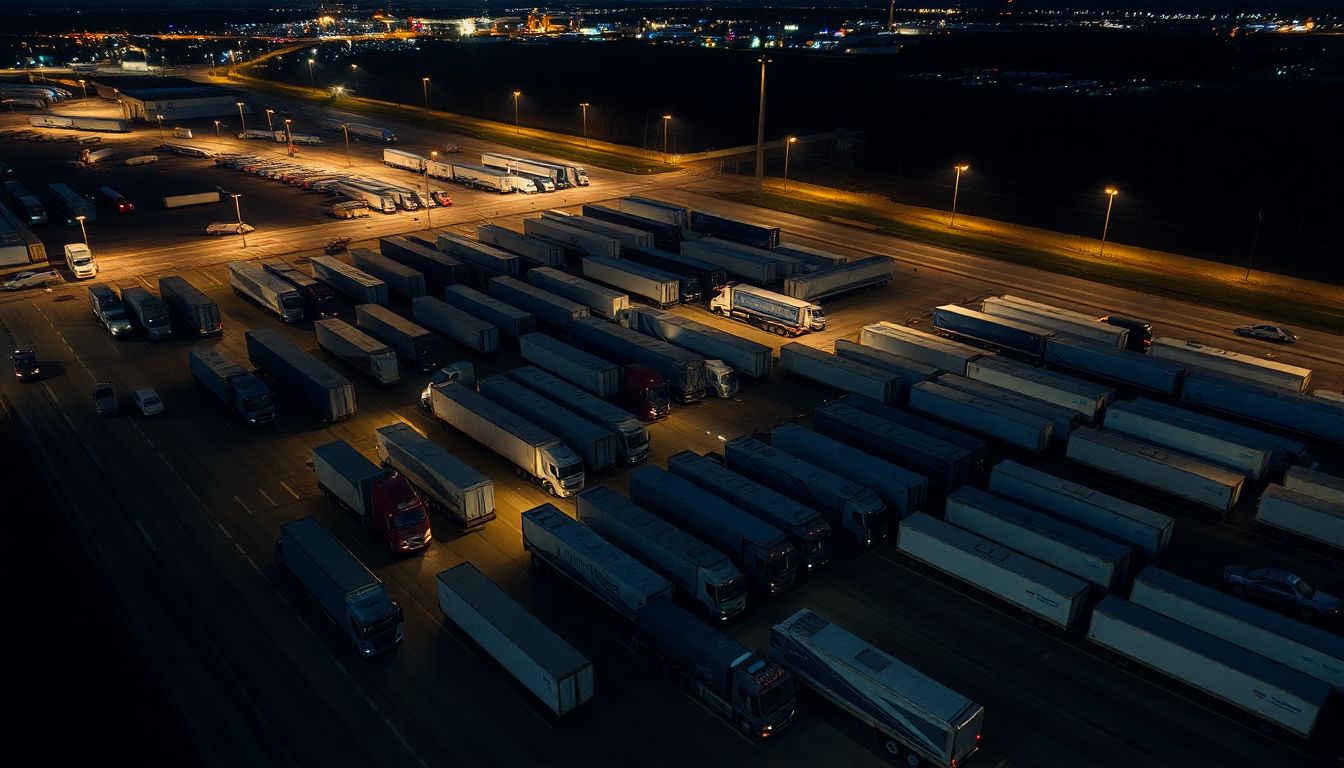
Drop yard targeting. Trailers left at unsecured drop yards overnight are one of the easiest theft opportunities in the freight world. No live presence, no access control, often no cameras. A team can hook up and pull a trailer in under two minutes. The load is gone before morning dispatch.
Highest-Risk Windows
Understanding where theft concentrates by time and location lets you focus protection where it actually matters.
The first night after pickup is consistently the highest-risk window for full load theft. Organized rings monitor freight broker boards and target loads immediately after pickup — before the freight has moved far from origin and while the carrier may not yet be checking in. High-value loads that sit overnight at a truck stop within 200 km of the pick-up point are at significant risk.
Trailer drops and unsecured parking. Any time a trailer is unattended in an unsecured or semi-secured location — a truck stop, a commercial parking lot, a customer's yard — it's a theft window. The longer the drop, the higher the risk.
Transition points. Cargo changes hands at origin, at cross-docks, and at destination. Each handoff is an opportunity for a fictitious pickup or inside diversion. The freight that goes missing at a cross-dock is often not discovered for hours.
Yard Security: The Foundation
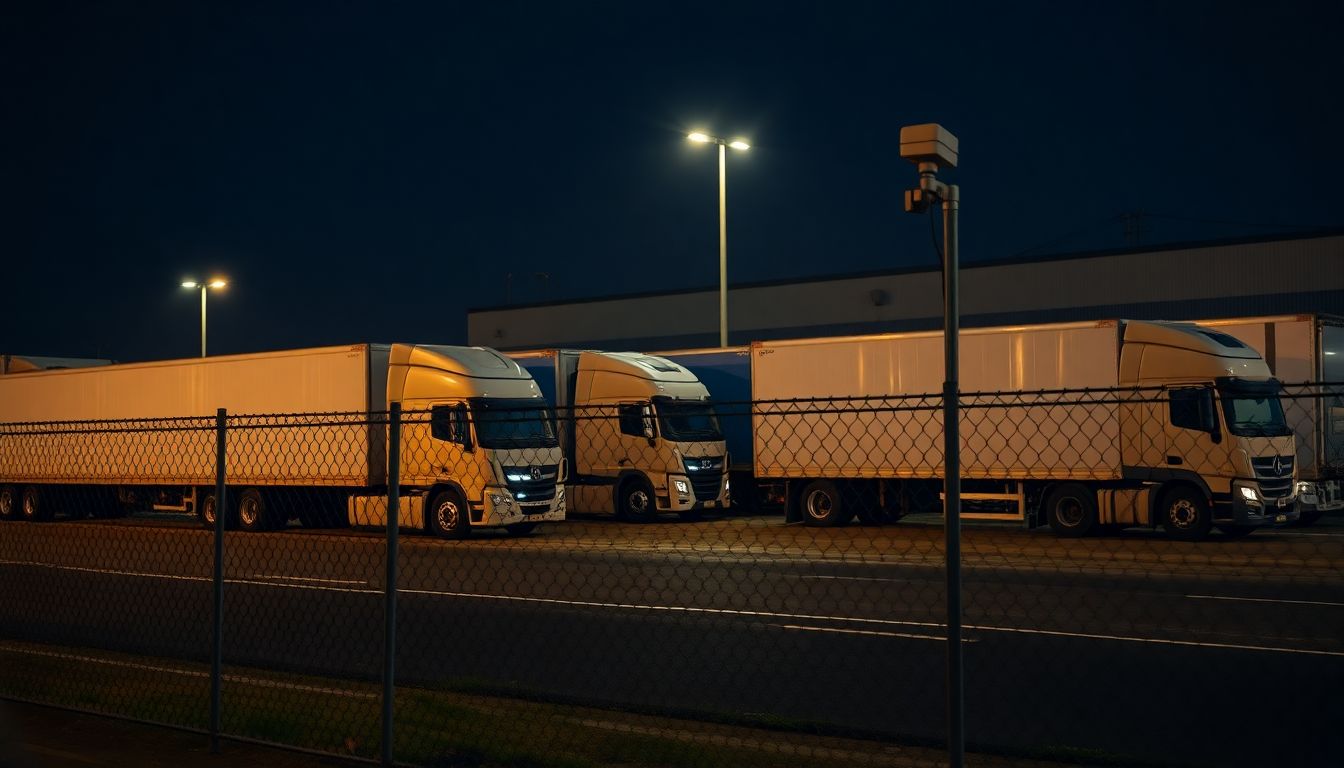
Most cargo theft losses that originate in Ontario begin and end at the trucking yard. A poorly secured yard — unsecured gate, no camera coverage, trailers sitting unlocked — is an invitation for organized theft.
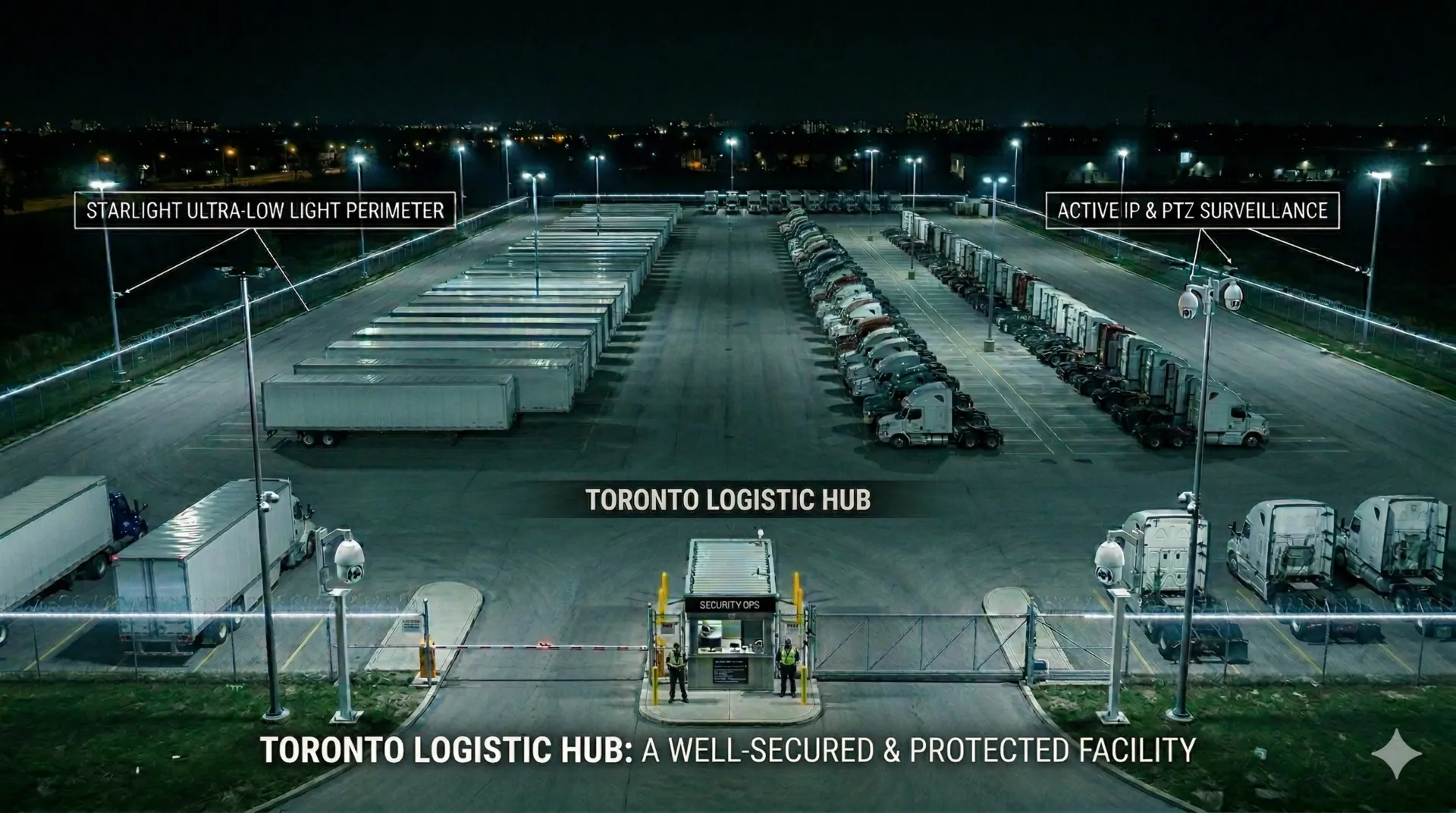
Camera coverage with licence plate capture at every vehicle gate. You need to know which tractors and personal vehicles entered and departed your yard, and at what time. Camera systems at gate approaches with LPR (licence plate recognition) capability create an automatic log. When a trailer goes missing, your first question is: who was in the yard and when? Without camera data, that question has no answer.
Access control on the yard perimeter. A chain-link gate secured with a padlock is not access control — it's a minor inconvenience. Powered gate systems with card or fob access log every entry and departure. Combined with camera coverage, this gives you a complete record of yard access by both authorized personnel and visitors.
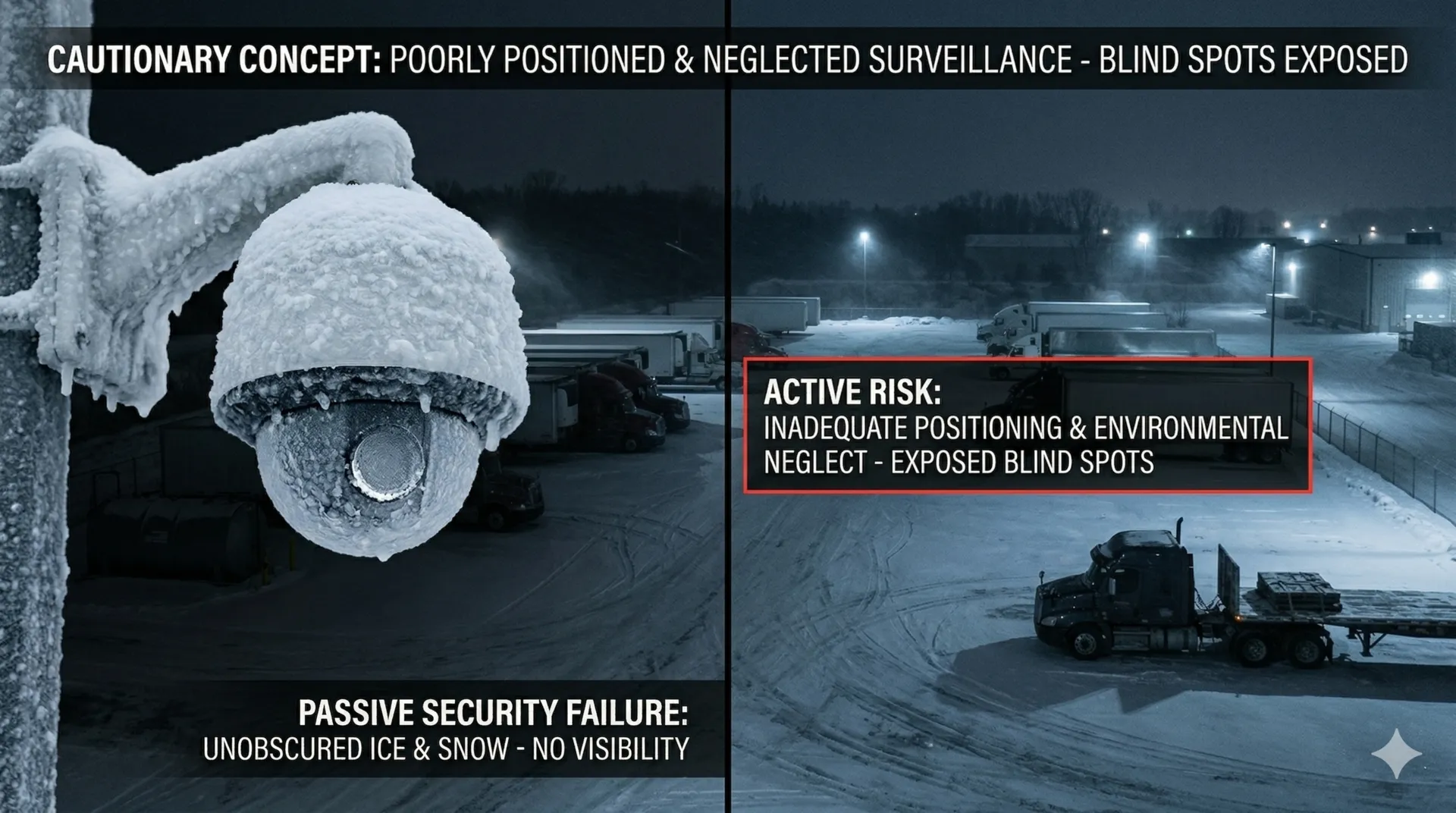
Camera coverage inside the yard. Dome or PTZ cameras covering trailer rows, the dispatch area, and the building perimeter should be on continuously recording NVRs with at least 30 days' retention. The coverage gaps on most trucking yards are significant — a camera covering the front of the property doesn't capture what happens behind the building at 2 AM.
Seal integrity on high-value loads. All trailers carrying high-value freight should be sealed at origin with numbered cargo seals, logged against the load documentation. A broken or substituted seal at delivery is an immediate red flag. This simple process creates accountability at every handoff point.
In-Transit Protection
Dual GPS tracking systems. A single GPS tracker is vulnerable to jamming and physical removal. Two trackers — one in a standard location, one concealed — provide redundancy. For high-value pharmaceutical, electronics, or consumer goods loads, this is the minimum standard. Trailer tracking systems that transmit via cellular AND satellite provide coverage in jammed or low-signal environments.
Driver check-in protocol. High-value loads should be on a mandatory check-in schedule — a brief call or text confirmation at defined intervals (departure, fuel stop, parking for the night, arrival). A missed check-in triggers immediate manager contact and, if unresolved, law enforcement notification. This protocol is simple to implement and converts a missing load from a next-morning discovery to a same-night response.
No first-night stops within the first 300 km. Where logistics allow, high-value loads should not park overnight in the first 300 km from origin. This is when theft risk is highest. If an overnight stop is unavoidable, choose secured truck stops with camera coverage and avoid isolated lots.
Pre-employment screening for drivers on sensitive loads. Not every driver needs the same background check. Drivers regularly hauling high-value pharmaceutical, electronics, or food loads should have a more thorough vetting than drivers on low-risk bulk freight. This is standard practice at sophisticated carriers and reduces the inside information risk substantially.
When Theft Happens
The first 24 hours after a cargo theft are critical for recovery. The moment a load is identified as missing, the response should include: immediate notification of the carrier/broker, load tracing through tracking devices, notification of the relevant police jurisdiction (OPP or municipal, depending on where the load originated or where the trailer was last known), and notification to Équité's cargo theft reporting line. Loads that generate police involvement within the first few hours have meaningfully higher recovery rates than those that don't surface until the next business day.
The trucking companies that manage cargo theft effectively treat it as an operational risk, not an insurance problem. Insurance covers losses after the fact. Prevention and rapid response are the only tools that actually protect your margins.