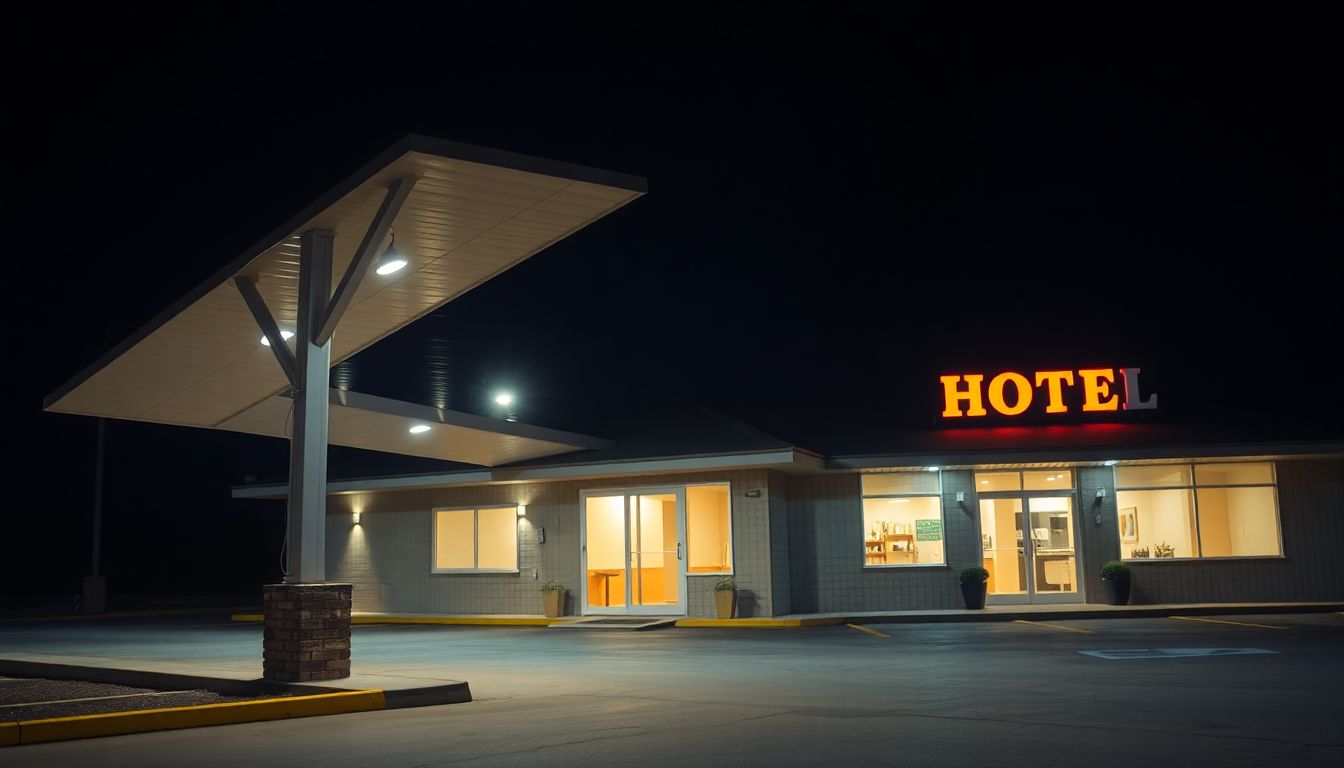
Ontario hotel and motel operators manage a security environment that is structurally challenging: large parking areas that are effectively public, guest rooms accessible from multiple exterior points, significant cash and payment activity at the front desk, and a guest population that is transient and largely unknown to staff. The liability dimension compounds the operational security challenge — every incident on the property, from a vehicle break-in to a slip in the corridor to an assault in the parking lot, is a potential claim against the property.
The most frequent crime category at Ontario hotel and motel properties is vehicle break-in. The pattern is consistent across the province: incidents peak between 2 and 5 AM, concentrate on vehicles left in parking areas without coverage, and target vehicles with visible items inside. Each vehicle break-in is two problems for the property operator: a crime that affects a guest's stay, and a liability event where the guest's insurance or litigation posture will depend on what you can document about the lighting, camera coverage, and response on your property.
The Risk Profile for Ontario Hotel and Motel Properties
Vehicle break-ins and parking lot crime. Parking areas at hotels and motels are open, accessible, and contain vehicles from guests who are asleep and won't notice an incident until morning. Most Ontario properties have camera coverage at the parking area entrance and at the front of the building. Parking area interiors, side lots, and rear lots — where incidents are most likely to occur — are frequently uncovered.
Room access incidents. Unauthorized access to guest rooms — whether through a compromised key, a propped door, or a master-key vulnerability — is a significant liability risk for any hotel operator. Properties with older key card systems, particularly magnetic stripe systems without audit logging, have limited ability to document who accessed a room and when. This makes responding to guest complaints about room access extremely difficult.
Front desk robbery and cash handling. Properties with night audit staff working alone at the front desk, often in the early morning hours, have a staff safety profile that is frequently not addressed with appropriate security measures. Camera coverage at the front desk, a panic alarm with immediate monitoring response, and policies around cash handling during overnight hours are standard in well-managed properties and absent in many smaller Ontario motels.
Common area incidents. Stairwells, corridors, laundry rooms, and fitness areas are locations where guest-on-guest incidents — thefts from rooms left unsecured, assaults, and harassment — occur. These are also the areas where camera coverage is most frequently absent.
Liability and Documentation: The Overlooked Security Risk
Every security incident at a hotel or motel property generates a liability exposure that is directly related to what the operator can document about the condition of the property at the time of the incident. Ontario courts and insurance adjusters will want to know: Was the parking lot adequately lit? Was there camera coverage? What did the footage show? Was the footage retained?
Parking lot lighting. Inadequate lighting is the first allegation in any parking lot crime liability claim. Lighting levels in parking areas should meet the recommended standards in the Illuminating Engineering Society guidelines for parking facilities. This is both a practical safety measure and a liability defense position.
Camera retention at the time of the incident. A guest who reports a vehicle break-in three days after check-out is requesting footage from three days ago. A camera system with 7-day retention may have already overwritten it. A minimum of 30 days' retention is necessary for hotel and motel properties given the delayed reporting pattern of guest incidents.
Room key audit logs. Modern key card systems with electronic audit capability log every key presentation at a room door — entry, exit, and failed attempts. This log is critical evidence when a guest claims unauthorized room access. Older magnetic stripe systems typically don't provide this.
Documented incident response. When a guest reports an incident, the property's documented response — the time it was reported, who responded, what was done, and what camera footage was reviewed — is part of the liability record. Properties with no incident response protocol are making this documentation up after the fact, and it shows.
Common Security Gaps at Ontario Hotel and Motel Properties
Parking lot coverage that doesn't cover the parking lot. A camera at the entrance captures vehicles arriving. It doesn't capture a vehicle break-in happening in row three at 3 AM. Adequate parking coverage requires cameras distributed through the lot — not just at the perimeter.
No camera coverage of corridors and stairwells. Guest room corridors are the primary zone for property crime against guests. Most Ontario hotel and motel properties have corridor cameras at best on one or two floors, and stairwell coverage is almost universally absent.
No monitoring during overnight hours. Front desk staff during overnight periods are often managing administrative tasks and are not actively monitoring camera feeds. A monitored alarm system with camera-verified alerts provides an active response layer that a single overnight staff member watching a 16-camera grid cannot.
Old key card systems without audit capability. Magnetic stripe key systems are still in use at many Ontario motels. These systems provide physical access restriction but no electronic audit trail. A room access incident cannot be reconstructed from a magnetic stripe key log.
What Properly Secured Ontario Hotels and Motels Look Like
Effective hotel and motel security is designed around three protection zones: the parking area, the building perimeter and corridors, and the front desk.
The parking area has distributed camera coverage with adequate IR illumination for overnight performance. Lighting meets recommended standards throughout the lot. Motion alerts during overnight hours notify a monitoring station of activity in the lot.
Building corridors on every floor have camera coverage. Stairwells at each end have coverage. The building perimeter — all exterior access points — is covered by cameras and monitored by a contact alarm system.
The front desk has camera coverage, a panic alarm connected to a central monitoring station, and cash handling protocols for overnight staff that minimize the amount of cash accessible during a low-staff window.
Key card systems are modern electronic systems with door audit logging. Every room access event can be queried for investigation purposes. Guest incident response is documented on a standard form with camera footage reviewed and flagged for retention.
For a detailed breakdown of security systems designed for Ontario hotels and motels, see our hotel and motel security page.