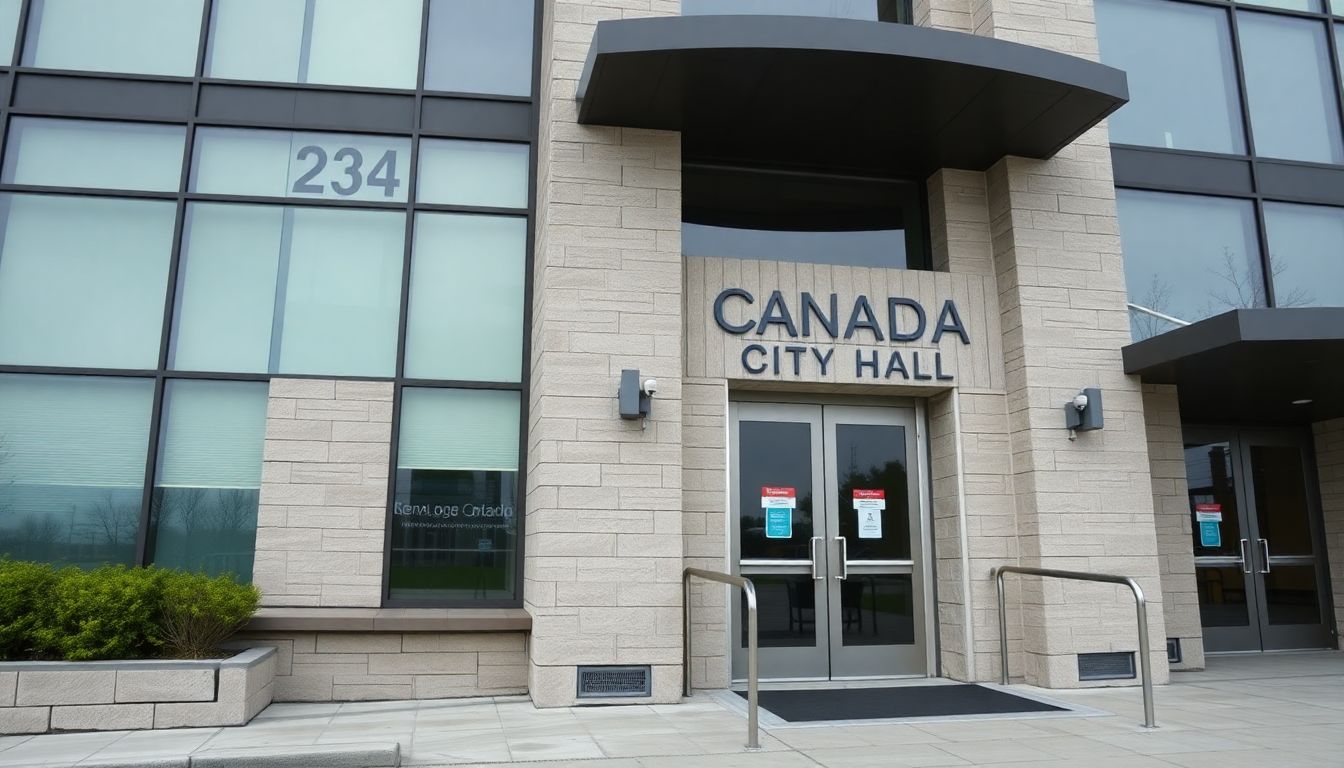
Ontario municipal buildings occupy a position that makes security design genuinely complex. They must be accessible to the public — that's not optional, it's a function of their mandate. At the same time, they hold sensitive records, cash and payment systems, government assets, and staff who work in direct contact with members of the public who may be frustrated, unstable, or hostile. The security challenge isn't locking people out — it's managing access intelligently while maintaining a functional public service environment.
The incidents that occur at Ontario municipal buildings tend to cluster around three scenarios: public-facing staff encountering agitated or threatening individuals, after-hours break-ins targeting cash, electronics, or records, and unauthorized access to restricted administrative and records areas during business hours.
The Threat Landscape for Ontario Municipal Buildings
Public counter incidents. Staff who process payments, handle permit applications, bylaw complaints, or social service referrals work in direct contact with members of the public under stress. Verbal abuse is frequent. Physical threats and assaults, while less common, happen with enough regularity that municipal staff associations in Ontario regularly raise it as a workplace safety issue. Counter areas with no physical barrier, no panic notification system, and no camera coverage are a meaningful staff safety gap.
After-hours break-ins. Municipal buildings hold cash drawers, payment terminals, petty cash, IT equipment, and printed records. After-hours break-ins — through propped doors, forced windows, or bypassed alarm systems — are more common than most municipalities publicly acknowledge. The combination of known contents and predictable staffing schedules makes municipal buildings manageable targets for opportunistic break-ins.
Unauthorized access to restricted zones during business hours. A member of the public who gains access to an administrative area — intentionally or by following a staff member through a door — has access to employee workstations, records storage, server rooms, and staff common areas. In municipal buildings without floor-level access control on the boundary between public and staff zones, this boundary is enforced only by the attentiveness of whoever happens to be present.
Document and records security. Municipal records — property files, bylaw enforcement records, social services case files — are sensitive. Unauthorized access to records storage, whether physical or digital, represents a significant liability and in some cases a legal breach of privacy obligations under Ontario's Municipal Freedom of Information and Protection of Privacy Act (MFIPPA).
Common Security Gaps in Ontario Municipal Buildings
No panic notification for public-facing staff. Counter staff in bylaw enforcement, licensing, and payment processing offices frequently have no means of quickly and discreetly notifying security or law enforcement of a threat situation. A panic button or duress alert integrated with the monitoring system — discreet, within reach, and tested regularly — is standard in higher-risk public contact environments and absent in most Ontario municipal offices.
Camera coverage of public zones but not staff zones. Many Ontario municipal buildings have cameras in the lobby and at the public entrance. The administrative wing, council chambers access corridor, and records storage area are often uncovered. A member of the public or a contractor who gains access to the staff side of the building is effectively unmonitored.
No after-hours intrusion monitoring aligned to building zones. Municipal buildings have multiple occupancy profiles: some areas close at 5 PM, others may host evening council meetings or community events until 10 PM or later. Intrusion monitoring that treats the entire building as a single alarm zone cannot accommodate this without constant manual arming and disarming — which means it often gets left in an unarmed state. Zone-based intrusion detection aligned to occupancy schedules is the correct design.
Outdated or unmanaged access credentials. Municipal buildings accumulate contractors, service personnel, and former staff over years of operation. In buildings without a disciplined credential management process, the number of active credentials substantially exceeds the number of current authorized users. A contractor who worked on HVAC five years ago may still have a working fob.
No camera retention policy aligned to accountability requirements. Municipal operations generate accountability questions that may surface weeks or months after an incident. A MFIPPA request, a staff complaint, or a liability claim may require footage from a date well outside the 7–14 day retention window on most legacy systems. Municipal buildings should operate with 30-day minimum retention as a baseline.
What Properly Secured Ontario Municipal Buildings Look Like
Effective municipal building security is designed around the public-restricted boundary. The public zone — lobby, service counters, waiting areas — has camera coverage and adequate signage. The transition to the staff and administrative zone is controlled by access control with logged credential access. A member of the public cannot pass that boundary without escort or a valid credential.
Public-facing counter areas have cameras covering both the counter and the public-side approach. Staff have panic notification capability — either physical panic buttons or wearable duress devices. The monitoring station receives panic alerts with immediate priority dispatch.
After-hours intrusion detection is zone-based, aligned to building occupancy schedules. Evening event spaces can be occupied without disarming the administrative wing. Each zone arms and disarms independently.
Camera retention is 30 days minimum. A documented retention policy covers the building and is consistent with the municipality's records management obligations. Credential audits occur annually and at every staff departure.
For a detailed breakdown of security systems designed for Ontario municipal buildings, see our municipal government security page.