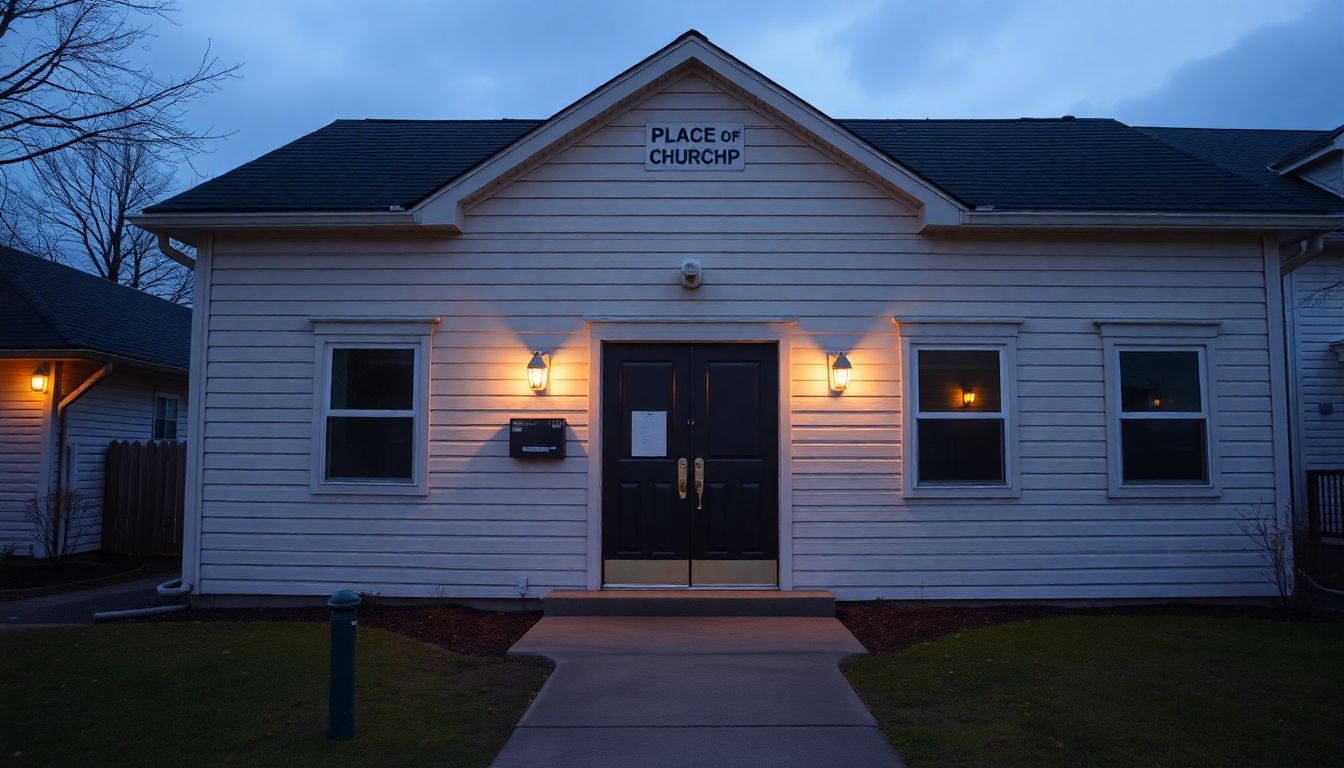
Ontario places of worship face a security challenge with no clean parallel in commercial security. The mission of these institutions — to be open, welcoming, and accessible to all — exists in direct tension with the security measures needed to protect congregants and staff from a genuinely elevated threat environment. Hate-motivated incidents at religious institutions in Canada have increased significantly over the past several years. Statistics Canada data shows hate crimes motivated by religion have risen year over year, with Jewish, Muslim, and Christian institutions among the most frequently targeted.
The response to this threat cannot be to convert a place of worship into a hardened facility. Congregants who feel they're entering a security checkpoint rather than a sanctuary will stop coming. The security challenge is to achieve meaningful protection while maintaining the character of the institution. This is a design problem as much as a technology problem.
The Threat Landscape for Ontario Places of Worship
Targeted vandalism and property crime. Graffiti on exteriors, broken windows, and damage to property symbols and signage are the most frequent incidents. These are often hate-motivated and tend to occur at night or over weekends when the building is unoccupied. They are also the lowest barrier to deterrence — camera coverage at building entrances and visible at exterior symbol installations is a substantial deterrent for opportunistic vandalism.
Threatening correspondence and harassment. Many Ontario religious institutions receive threatening communications — letters, emails, and in-person confrontations. Staff and clergy who handle public inquiries are often the first contact for individuals in crisis or with hostile intent. The congregation's leadership and administrative staff face a different risk profile than general attendees.
During-service incidents. An individual who enters during a service — whether mentally ill, impaired, or motivated by ideological hostility — represents a threat in a high-density, low-security environment. Most places of worship have no staff trained in threat identification, no monitoring of who enters during services, and no communication system between greeters or ushers and whoever would call for emergency response.
After-hours break-ins. Religious institutions often hold cash donations, valuable religious artifacts, A/V and music equipment, and in some cases food bank supplies. Break-ins targeting these assets occur regularly. Most Ontario places of worship have no camera coverage of the interior.
What Ontario Places of Worship Get Wrong
Security measures that are invisible to the threat and visible to congregants. Large camera housings at eye level, highly visible keypads at the main entrance, and prominent security signage create a checkpoint feeling that damages the welcoming character of the institution. Security measures that are effective but less prominent — cameras at ceiling height, discreet access control, audio deterrent systems rather than visible barriers — achieve protection without the atmosphere of surveillance.
No camera coverage of the exterior at night. The building is unoccupied most of the time. Vandalism, graffiti, and property damage — the most frequent incidents — happen when no one is there. Most Ontario places of worship have no exterior camera coverage, meaning incidents go undocumented and unresponded to until they're discovered the next day.
Greeting culture with no threat awareness. Greeters and ushers at Ontario religious institutions are wonderful for community building and terrible for threat identification. They are not trained to recognize concerning behaviour, have no communication system, and often have no role defined in the event of an incident. Training greeters in basic threat awareness and providing them with a communication method — a discreet radio or a phone channel to administration — is inexpensive and significantly improves response capability.
No panic notification for clergy and staff. Clergy and administrative staff who meet with unknown individuals — in counselling contexts, during donation discussions, in private meetings — have a private meeting risk profile similar to that of a frontline social worker. A discreet wearable or fixed panic alert connected to the monitoring system is a basic protection measure that almost no Ontario places of worship have deployed.
How to Secure a Place of Worship Without Making It Feel Fortified
The design principle for worship security is: visible presence, not visible barriers. People should see that the space is cared for and that they are welcomed — and that care extends to their safety. The security measures that communicate this best are excellent lighting, clean and maintained exterior spaces, and camera systems with professional housing that blends into the architecture rather than dominating it.
Exterior cameras at key positions — main entrance, parking areas, side entrances, exterior symbol installations — should be well-mounted, clean, and visible enough to deter vandalism without creating a surveillance atmosphere. Interior coverage in non-worship spaces — lobbies, administrative corridors, youth program areas — provides accountability documentation without intruding on the sanctuary.
Access control in places of worship is typically applied to staff areas and sensitive storage rather than main entrances. The main sanctuary should remain accessible during service hours. Staff offices, donor records, safe storage, and server rooms should require credentials for access.
After-hours protection is the clearest win: a monitored intrusion alarm integrated with camera verification, so that a break-in at 2 AM generates an immediate police dispatch rather than a next-morning discovery. The combination of visible exterior cameras and a monitored alarm is a powerful deterrent for opportunistic vandalism — the most common incident type.
For a detailed breakdown of security systems designed for Ontario places of worship, see our place of worship security page.